Circadian Rhythm Yoga Mat: Time Your Practice
By Aiko Tanaka • 27th Mar
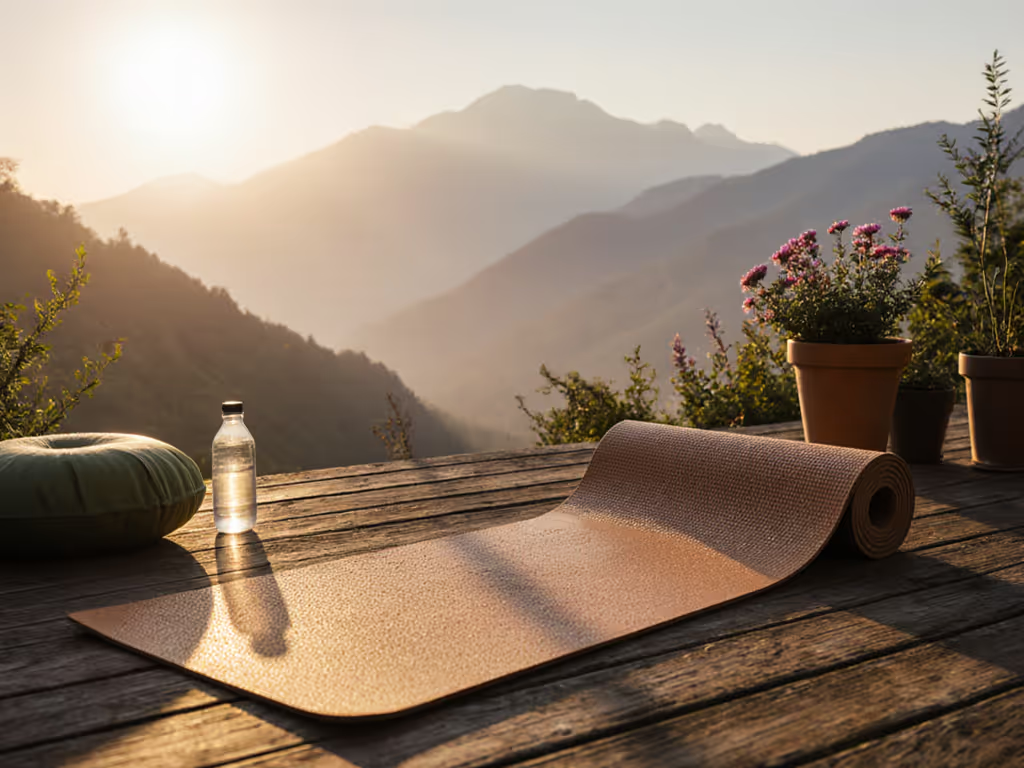
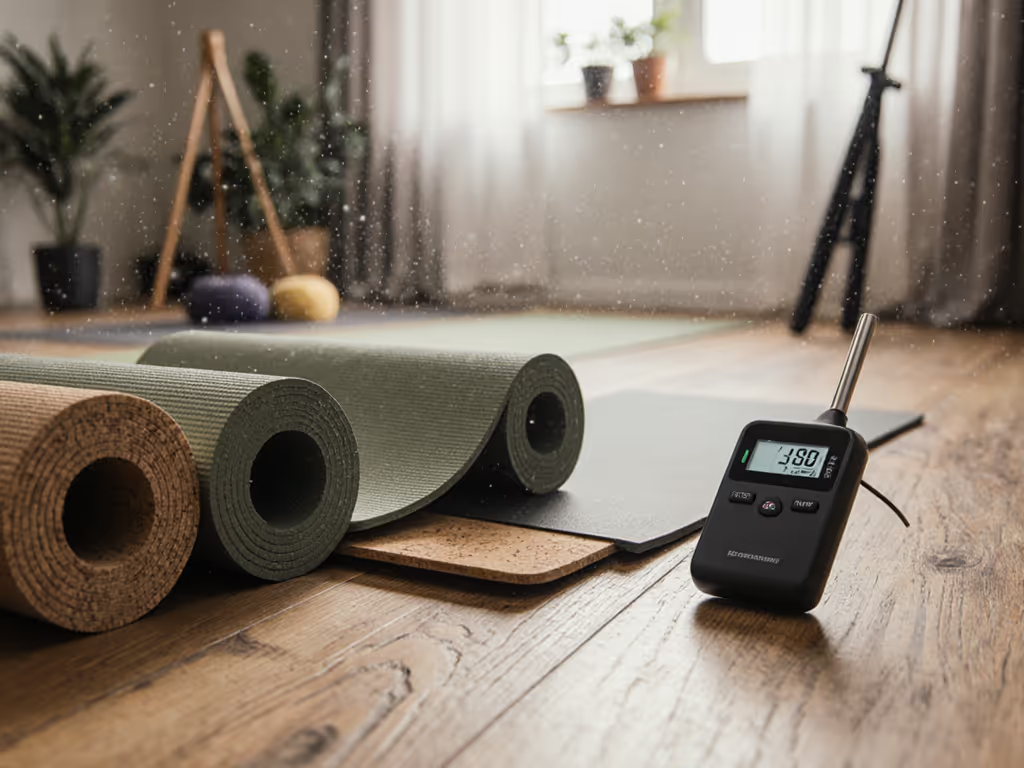
When you step onto your mat in the morning versus evening, you're not just changing the hour, you're shifting your body's internal demands. A circadian rhythm yoga mat isn't a special product category; it's about understanding how your natural timing interacts with mat performance and, more importantly, how your practice timing shapes which mat will actually serve you best. Field heat is the truth serum for mat grip, and so is time of day. If your practice skews to sweaty evenings, see our verified non-slip hot yoga mats for proven wet-grip picks.
What Does Circadian Rhythm Have to Do with Choosing a Yoga Mat?
Your circadian rhythm (the body's internal 24-hour clock) regulates sleep, hormone release, body temperature, and even sweat production[4]. When this rhythm is synchronized with your yoga practice, the benefits multiply: better sleep quality, improved energy, and more stable moods[7]. But here's what instructors in back-to-back classes notice: the mat you depend on at 6 a.m. may behave entirely differently at 6 p.m.
Timing your practice aligns with your circadian biology, and your mat selection should follow suit. Morning practice synchronizes with your body's rising cortisol and body temperature; evening practice works against that natural clock but offers stress relief and emotional grounding. The grip, cushion firmness, and durability requirements shift depending on when (and how intensely) you'll be using your mat.
Why Does Morning Yoga Require Different Mat Specs Than Evening Practice?
Research shows that morning yoga yields superior benefits for sleep quality, energy, and lifestyle consistency[7]. Early sessions generate less sweat for most practitioners because core body temperature is lower and the nervous system is still in a parasympathetic-leaning state. This means your mat can prioritize stability and alignment cues over extreme sweat-shedding grip. If alignment support helps you stay stable in dry morning sessions, explore mats with alignment guides that promote consistent hand and foot placement.
Evening practice, by contrast, happens when your body temperature peaks and cortisol is declining. You're often arriving from a stressful workday, your muscles are warmed up, and you're more likely to flow with intensity. Sweat output climbs. Your mat must handle moisture reliably and dry quickly so you can disinfect it before your next class or roll it away without odor buildup. To prevent lingering odors and speed up dry time, consider dedicated yoga mat drying racks tested to reduce mold risk.
For a yoga mat for beginners starting morning practice, this is liberating: you can focus on finding the right cushion and surface texture without wrestling with a high-performance sweat mat. Evening beginners, though, benefit from investing early in reliable grip, because foundational flows feel safer when your hands and feet won't slip. Safety builds confidence.
How Does Sweat Timing Affect Mat Durability and Maintenance?
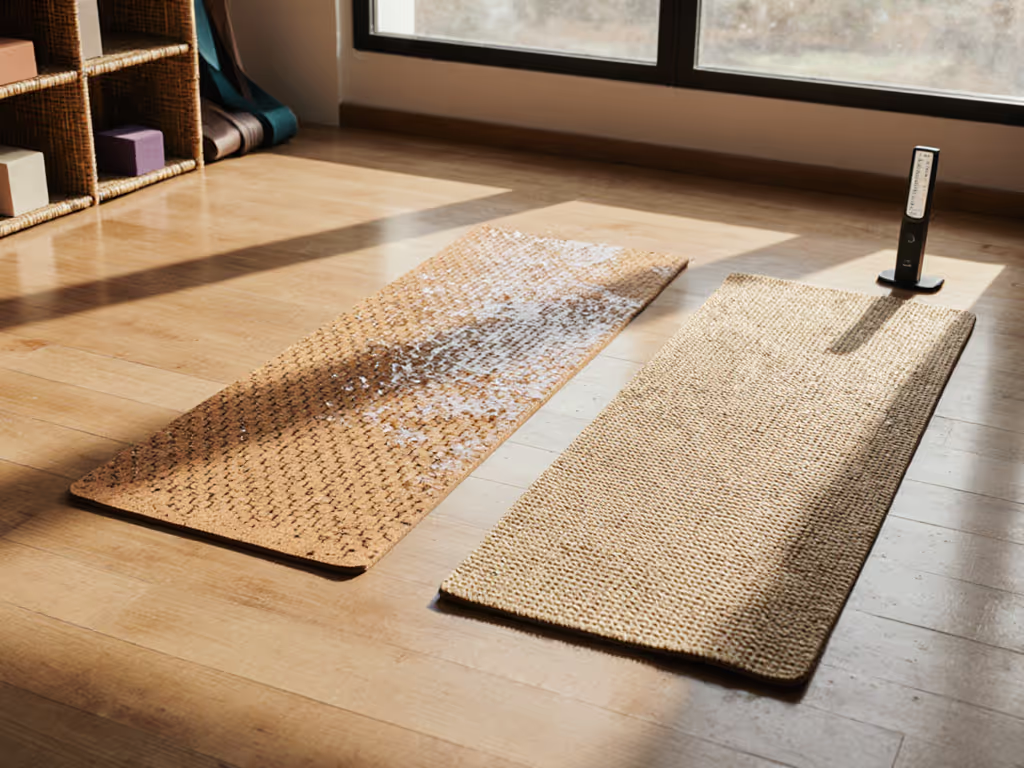
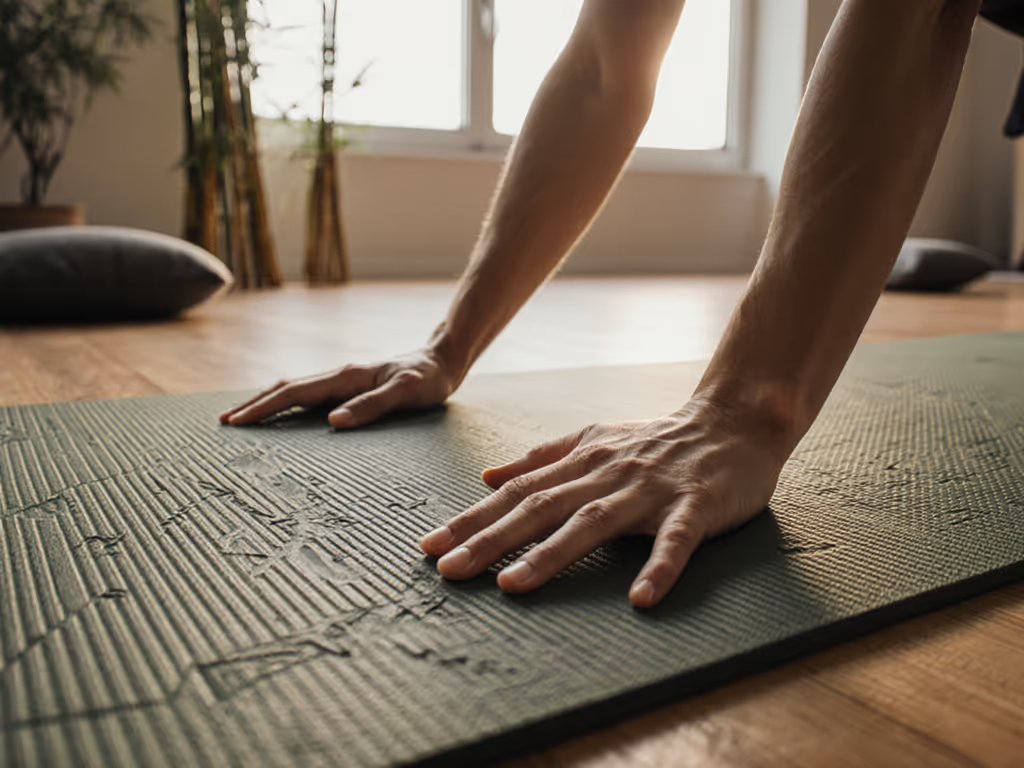
Here's an observation from teaching sequential classes: an afternoon mat absorbs more cumulative sweat than a morning one. If your mat's top layer is PU (polyurethane) or a synthetic blend, heavy evening sweat can degrade adhesives and break down the surface faster, especially if you're not drying and disinfecting consistently.
Morning mats age differently. They experience gentler sweat load, which means natural rubber or rubber-TPE hybrids can maintain their grip integrity longer. The catch: morning practitioners often skip the drying routine because they're rushing to work. Moisture trapped underneath for hours breeds odor and mildew (the invisible timer on mat lifespan).
I once rotated a lighter travel mat through a packed August evening class. The AC failed, the room fogged, and my mat (engineered for portability) slid during a simple twist. The backup, heavier and rubber-topped, held steady through puddles. After class, I timed the dry-down and disinfecting. That night I updated my teaching kit. The insight: sweat performance and closure speed aren't optional for evening practitioners. For morning yogis, consistency matters more than peak-sweat resilience.
Tested soaked, trusted dry. That's the actual test.
Does Light Exposure from Morning Practice Actually Change How a Mat Feels?
This is subtle but real. Light exposure is one of the most powerful regulators of circadian rhythm, and morning natural light (especially in the first hour after waking) shifts your nervous system and core temperature trajectory[8]. Your hands and feet have different sweat responses in morning light versus evening indoor studio light.
In morning sunlight, even in a heated room, most yogis produce 20-30% less hand/foot moisture than in evening practice under artificial lights[1]. Your grip expectations should reflect that. A mat rated "excellent wet grip" for evening flow might feel overly textured or grabby in a dry morning session, making transitions feel sticky instead of smooth.
Conversely, a mat chosen for morning's lower-sweat environment will likely feel dangerously slick by evening, especially in a hot-yoga setting or if you're doing your second session of the day. Plan accordingly.
What's the Data on Yoga Timing and Sleep Quality?
Research comparing morning versus evening yoga found striking differences. Morning yoga groups showed significant reductions in sleep disturbances, enhanced morning alertness, and improved dietary choices[7]. Evening yoga also improved sleep quality but excelled at reducing sadness and emotional tension[7].
Why mention this in a mat article? Because your why (your reason for practicing at that hour) shapes how hard your mat needs to work. Morning practitioners prioritizing sleep and routine consistency can choose a lighter, simpler mat; they're not battling sweat floods or post-work intensity. Evening practitioners using yoga as stress regulation need a mat that won't add friction (literal or mental) to their wind-down; that means reliable grip so they can focus on breath, not balance anxiety.
How Should Mat Thickness and Cushion Change Based on Practice Timing?
Mat thickness interacts with circadian rhythm in an underestimated way. For a deeper breakdown of thickness trade-offs by practice style, see our yoga mat thickness guide. Your joints and nervous system are stiffer in the early morning; mobility peaks mid-afternoon and starts declining by evening[1]. A thinner mat (3-4 mm) works fine for morning practice when you're moving cautiously and building heat gradually. Evening practice (especially dynamic vinyasa) benefits from slightly more cushion (5-6 mm) because your muscles are warm but your proprioceptive feedback is fading as the day ends.
Thicker isn't always better, though. Too much cushion in the evening can make balances unstable when fatigue sets in, and it's heavier to carry if you're commuting to an evening class. The fit-for-purpose mat accounts for timing.
What About Noise and Neighbors During Evening Practice?
This is a real constraint for urban practitioners. Evening home practice often happens when neighbors are present. A mat with dense cushioning and a textured base absorbs sound better than a thin, smooth-bottomed mat. For a science-backed look at material acoustics, read quiet yoga practice sound science to choose a low-noise surface. Morning practice, often done earlier when the building is quiet, doesn't require the same acoustic consideration. One less trade-off to manage.
Summary and Final Verdict
Choosing a circadian rhythm yoga mat means asking: When do I practice, and what does my body actually do at that time?
Morning practitioners should prioritize alignment, lighter weight for easy storage, and good cushion that supports joints without excessive grip demands. A mat for beginners starting mornings can be simpler (think natural rubber or rubber-blend mats in neutral colors, 4-5 mm thick, with moderate grip).
Evening practitioners need mats engineered for sweat: reliable wet grip, fast dry-down, and durable top layers that won't peel or degrade. Heat-resistant materials and dark colors hide stains and smell better. Thickness matters less; stability and grip matter most.
If you practice both times (and many serious students do), you have two paths. One: invest in a single high-performance mat that handles evening demands and simply works harder during morning sessions. Two: keep a lightweight mat for morning flow and a premium sweat-rated mat for evening, rotating them and allowing each to dry fully before reuse.
The deepest truth remains unchanged: a mat that performs when it's truly tested (when you're soaked, stressed, and moving fast) is the one that frees your mind. Timing your practice with circadian science optimizes your health outcomes; matching your mat to that timing removes one barrier between you and steady practice. Tested soaked, trusted dry. That alignment is what matters.
Related Articles