Thin Yoga Mat Textures: Proprioception for Advanced Poses
By Aiko Tanaka • 15th Mar
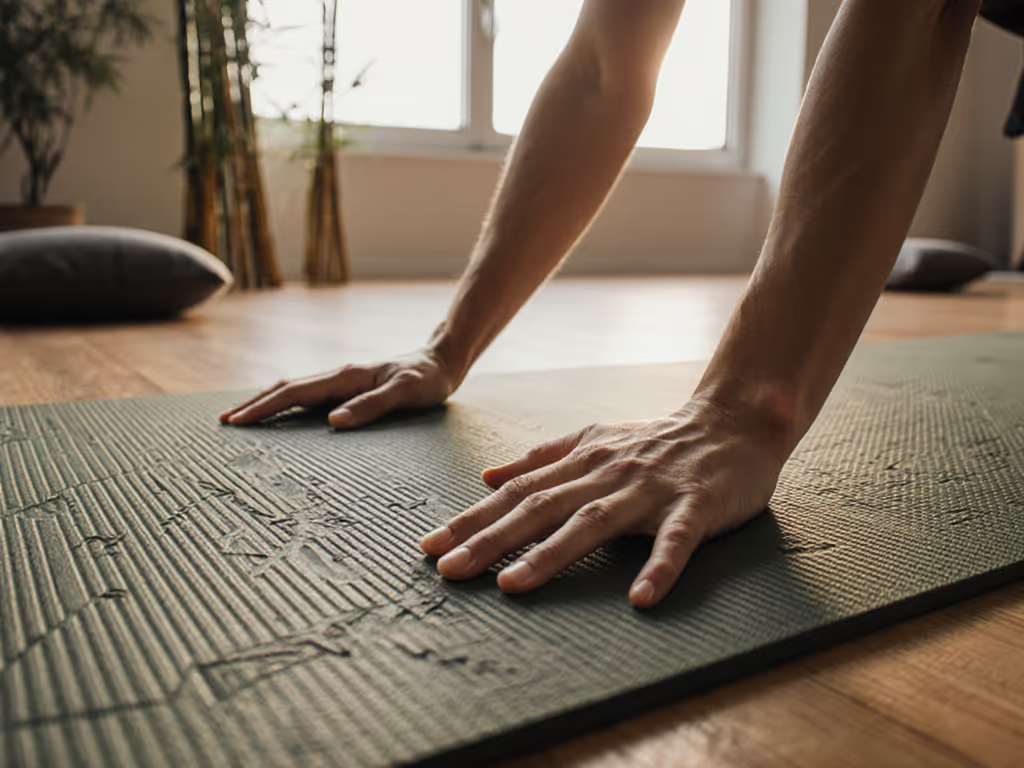
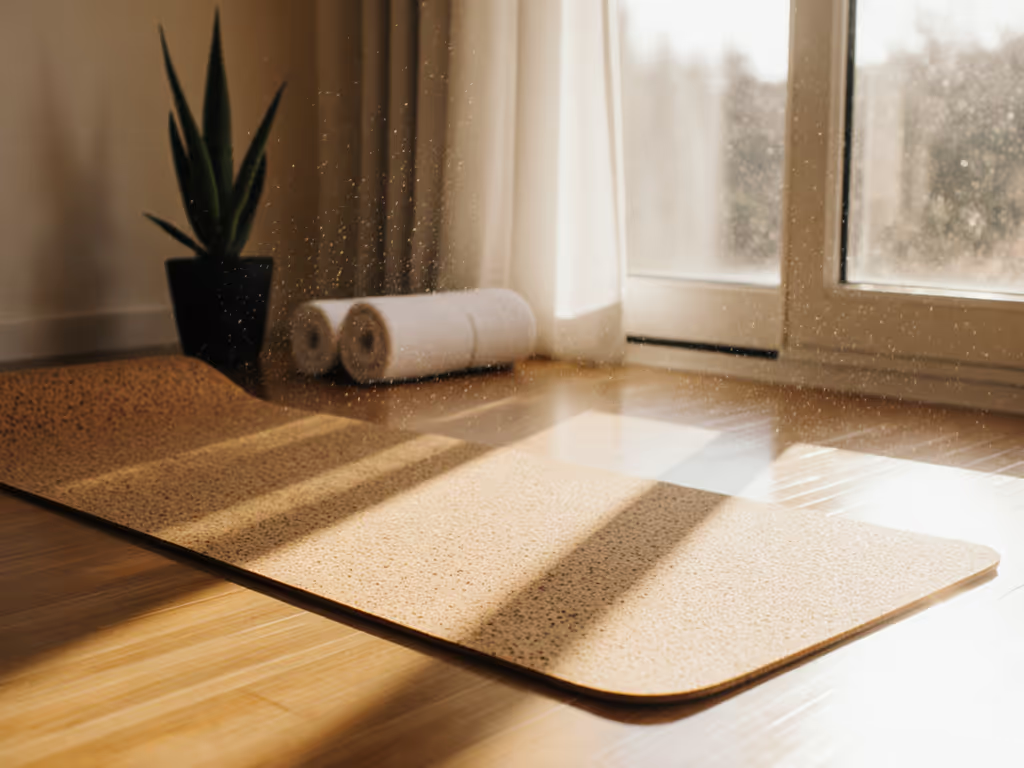
When you're in the middle of a sweaty vinyasa flow or holding a challenging balance pose, the last thing you want to think about is whether your mat will support you. A thin yoga mat with the right texture does exactly that. It gets out of your way. For advanced practitioners, the choice to go thin isn't about minimalism; it's about maximizing the sensory feedback your body needs to execute complex poses safely and with precision.
Why Proprioception Matters in Advanced Practice
Proprioception-enhancing yoga mats serve a specific purpose that goes beyond comfort. Proprioception is your body's ability to sense its position in space, and it's fundamental to advancing your practice. When you're locked into a challenging arm balance or deep twist, you're relying on constant micro-feedback from your feet, hands, and core to maintain alignment and prevent injury. If inversions are a priority, compare our thin mats that lock in inversions for pose-specific stability.
A thinner mat transmits ground-contact signals more directly to your nervous system. Rather than being cushioned away from the floor, your tactile sensors register subtle shifts in weight distribution with greater clarity. This unfiltered feedback loop trains your nervous system to respond faster and more precisely during transitions. Research on proprioception shows that consistent tactile surface contact enhances your body's kinesthetic awareness (the same neural adaptation that allows dancers to move through space without watching their feet).
For advanced practitioners, this precision isn't a luxury; it's a safety mechanism. Every adjustment your stabilizer muscles make during a bind or inversion happens because your proprioceptive system is reading the mat and floor beneath you. A surface that dulls that feedback makes you work harder to achieve the same stability.
Thin Mats and Ground Connection: The Foundation for Balance Poses
Advanced pose stability depends on a direct connection to the earth. In poses like Scorpion, Half Moon, or Warrior III, the difference between a secure hold and a wobble often comes down to how well your feet or hands can communicate with the floor. A thinner mat keeps that communication line open.
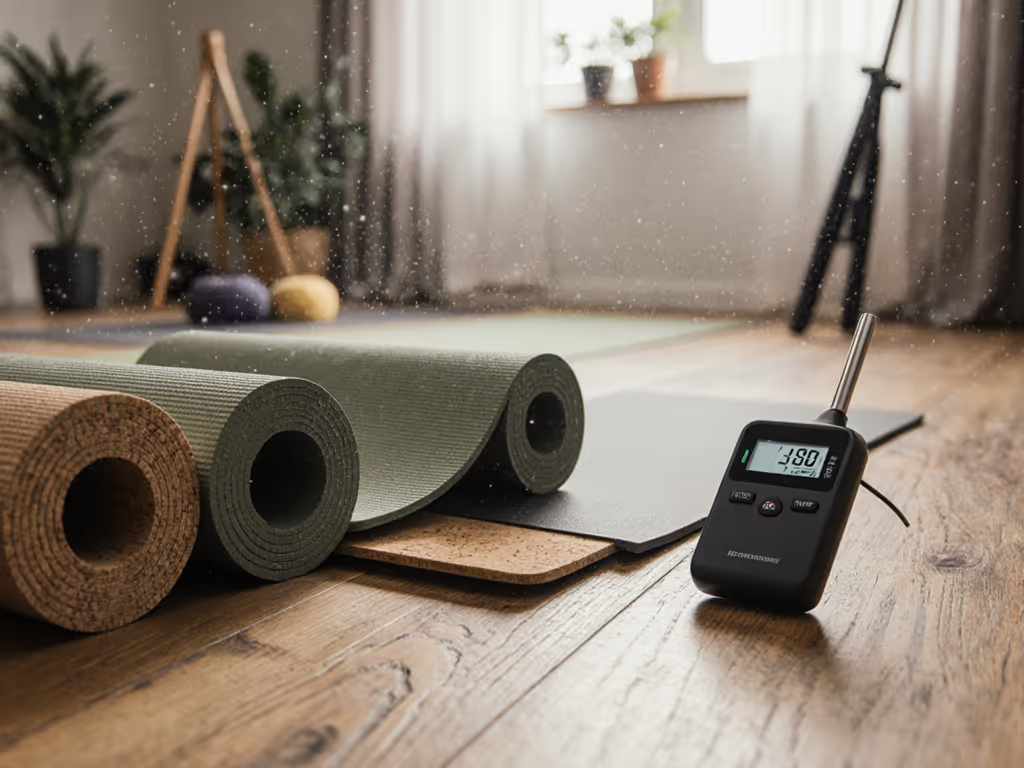
Thinner mats (typically 1.5-3 mm) provide superior ground connection essential for balance work. For a deeper breakdown of trade-offs, see our thin vs thick mat guide. Your feet sit closer to the actual floor surface, allowing subtle weight shifts to register immediately rather than being absorbed into thick cushioning. Advanced practitioners often prefer thinner mats precisely because they facilitate the controlled, measured movements that distinguish skilled practice from reactive scrambling.
This isn't to say thin mats sacrifice all cushioning. Quality mats combine responsive materials that absorb impact without creating instability. The key is that the mat responds to you rather than requiring you to fight against spongy give during critical moments.
Texture as the Silent Performance Variable
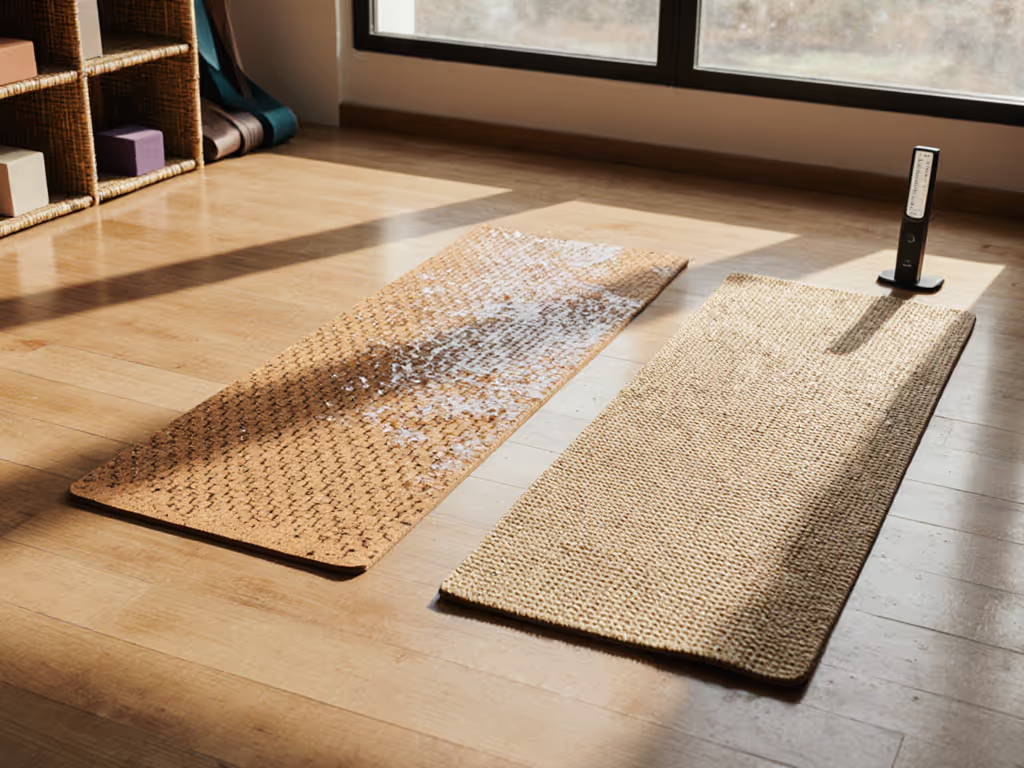
Here's what field-tested specifics reveal: texture matters as much as thickness. A thin mat with inadequate grip becomes a liability in heat, but a thin mat with optimized surface texture becomes invisible (you forget about it entirely and focus on your practice).
Studio chaos, simple choices. When sweat starts flowing, texture is your truth serum.
The surface you choose directly impacts how your hands and feet engage with the mat in real conditions. A balance-enhancing mat texture should feel tacky enough to hold your skin without creating friction resistance that slows transitions. In advanced flows, you're moving quickly through sequences; a grabby texture that catches your palm mid-flow is just as dangerous as a slick one.
Rubber and eco-friendly PVC surfaces offer a balanced grip, maintaining consistent friction while allowing minor deformation as you shift weight. During a dynamic Ashtanga sequence or fast Vinyasa transitions, the best grippy yoga mat is one that anchors your hands during weight-bearing poses yet releases smoothly when you lift to the next asana. This balance between firmness and adaptability optimizes both your skeletal alignment and your flow rhythm.
Advanced Flows and the Stability Question
Dynamic practices (Vinyasa, Ashtanga, Power Yoga) benefit from thinner mats because stability becomes non-negotiable during quick transitions and jump-backs. While thicker mats can absorb energy during powerful movements, they also introduce a subtle instability that forces your core to work harder just to maintain balance rather than to deepen the pose.
That said, thin doesn't mean fragile. A well-constructed thin mat with high-density materials provides enough shock absorption to protect your wrists and knees during floor poses without creating the spongy uncertainty that makes advanced balance work feel unsafe.
The sensory reality: when you're transitioning from Chaturanga to Upward Dog to Downward Dog in a heated room, you need to know exactly where your hands are landing. Tactile precision beats cushioned approximation every time.
Heat, Sweat, and Real-World Grip Performance
Advanced practice often happens in hot rooms. Field heat is the truth serum for mat grip. For wet-grip picks tested in heat, explore our verified non-slip hot yoga mats. A thin mat's advantage here is practical: less material means faster dry-down between classes and easier disinfecting. From a sensory perspective, a thinner mat that dries quickly maintains consistent grip across multiple sessions, whereas a thicker mat that stays damp can develop grip inconsistency and odor retention issues.
For practitioners rotating through back-to-back classes or teaching in succession, a thin yoga mat with reliable sweat performance eliminates a category of failure that thick mats often encounter. You're not managing mat maintenance between practices; the mat is ready to go.
Proprioception Training: How to Build Your Sensitivity
If you're transitioning from a thicker mat to a thin one, your proprioceptive system needs a brief adjustment period. Your nervous system has learned to anticipate a certain amount of cushioning; now you're asking it to process more direct tactile information.
Start with easier balance poses to develop familiarity with the new feedback profile. Tree Pose, for instance, becomes a proprioception diagnostic: you'll immediately feel whether your weight is centered or whether you're compensating through your hip. Close your eyes during stable poses to sharpen your internal sensing without relying on visual cues. Use your core more consciously during transitions; the increased demand on your stabilizers accelerates the adaptation process.
With consistent practice, that heightened proprioceptive clarity becomes automatic. Your body learns the language the mat is speaking, and your nervous system responds with faster, smarter adjustments.
Choosing the Right Thickness for Your Practice
Not every advanced practice calls for the absolute thinnest mat available. A thin yoga mat optimized for advanced work typically lands in the 3-4 mm range for dynamic styles like Ashtanga, balancing sufficient shock absorption against proprioceptive clarity. If you practice in a heated environment or rotate through multiple classes, this range provides the best trade-off between protection and feedback.
For practitioners with specific joint sensitivities, ensure your mat choice doesn't compromise your safety. Even thin mats can provide adequate wrist and knee protection if constructed from responsive, high-density materials. The goal isn't to suffer through injury-prone thinness; it's to find the thickness that maximizes proprioceptive input while respecting your body's needs.
Your Next Step: Field-Test for Feel
If you're ready to prioritize proprioception and ground connection in your advanced practice, start by testing thin mats in your actual practice conditions. Bring a candidate mat to a heated class or your most demanding flow sequence. Notice where you feel the difference (in your foot placement during balance work, in your hand position during arm balances, in how quickly you can sense and correct misalignment).
Pay attention to the sensory notes: How does the texture feel under your palms when they're warm? For sweat-specific recommendations, see our best thin yoga mat textures for sweaty hands. Does grip remain consistent through multiple transitions, or does it degrade as the mat warms? How quickly does sweat absorb or roll off? Does the mat feel stable under your feet, or does it compress in a way that makes you second-guess your weight distribution?
These field observations are more reliable than marketing descriptions. Your proprioceptive feedback is the calibration tool. Once you've felt the difference a properly chosen thin mat makes in your practice, you'll understand why advanced practitioners make this choice (not for trendiness, but for the sensory clarity that allows you to practice with intention, precision, and genuine safety).
Related Articles