Yoga Mat Grip Biomechanics: Why Texture Prevents Slipping
By Sofia Álvarez • 8th Apr
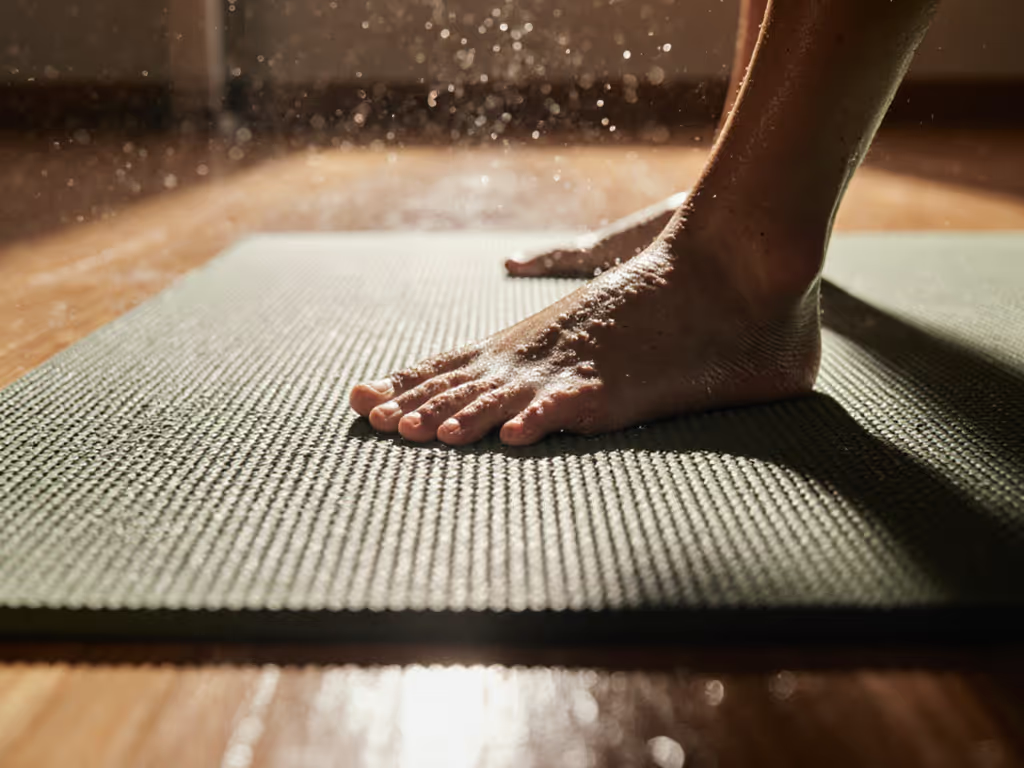
The moment your hands start sliding in downward dog, your nervous system registers danger. Your brain calculates odds, your breath shallows, and the pose (which should ground you) becomes a negotiation with physics. Yoga mat texture biomechanics isn't glamorous, but it's the forgotten engineer behind every stable inversion and every confident flow through sweat.
Understanding how texture actually prevents slipping requires stepping into the microscopic world where skin meets material. It's not magic, marketing, or luck. It's applied physics, and once you understand it, you'll stop choosing mats based on brand color and start evaluating them on evidence.
The Hidden Dialogue: Skin Texture Meets Mat Surface
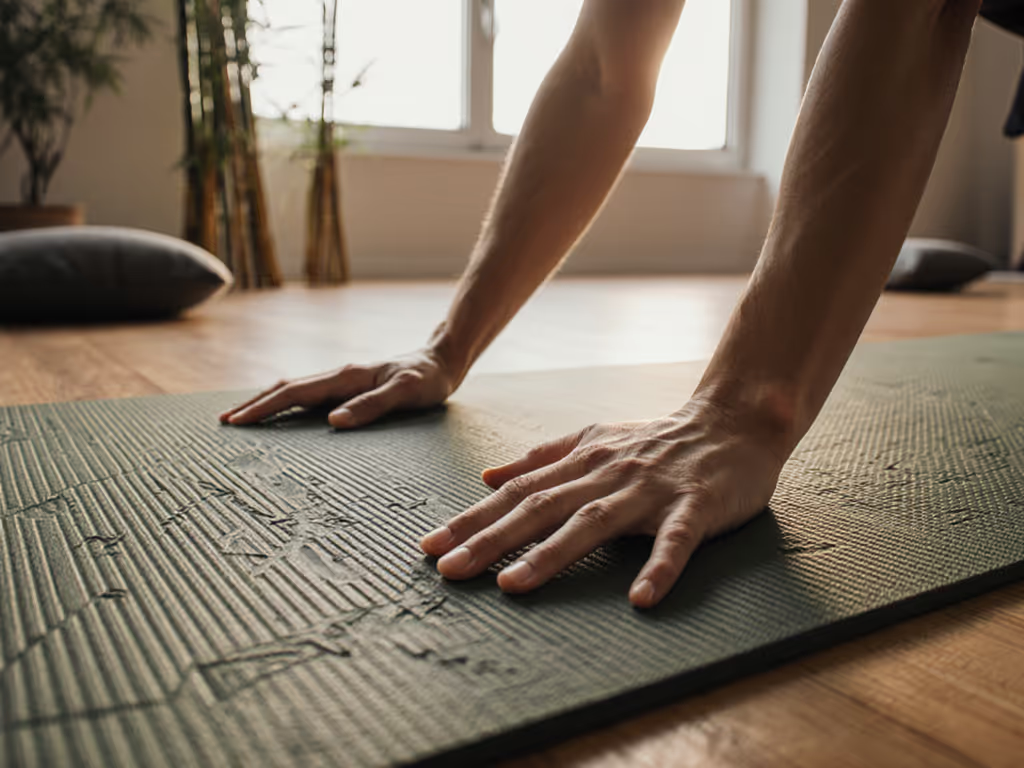
Your skin isn't smooth. Under magnification, it's a landscape of ridges, valleys, and microscopic follicles, a texture that's been shaped by evolution to grip. When you press your palm against a yoga mat, you're initiating a tactile conversation between two textured surfaces. The outcome of that conversation determines whether your hand stays planted or slides toward your neighbor's mat.
Skin texture yoga mat interaction happens across multiple scales. At the macro level, your whole hand molds into the mat's contours. At the meso level, your fingerprints engage with the mat's raised weave pattern. At the micro level (where the real work happens), the peaks and valleys of your skin physically interlock with the mat's surface at a scale invisible to the naked eye.
When a mat feels "slippery," it's usually because its surface is too smooth or too uniform. Imagine pressing your fingerprints against polished glass versus pressed linen: the linen's fiber structure gives your skin something to grip. A poorly designed yoga mat surface offers the textured promise of linen but delivers the grip of glass, especially once it's wet.
This is where material chemistry enters. A mat made entirely of smooth, closed-cell foam might feel dense and supportive in your hands right now, but it offers almost no microscopic anchor points for your skin. Conversely, a textured surface with an open, breathable structure creates thousands of micro-grabbing points, turning your skin's natural ridges into active participants rather than passive riders.
Microscopic Grip Mechanisms: Open-Cell Architecture and Capillary Absorption
At the microscopic level, grip mechanisms depend largely on a material's internal structure. This is where the science gets specific, and where many yoga mat marketing claims fall apart under scrutiny.
Open-cell materials (structures full of tiny interconnected air pockets) excel at grip precisely because they interact with moisture differently than closed-cell alternatives. When you sweat onto an open-cell polyurethane (PU) surface, those microscopic pores absorb and redistribute that moisture across the mat's top layer. This creates a film that increases surface friction rather than decreasing it, counterintuitive as that sounds.
Here's why: water acts as a lubricant between two hard, smooth surfaces (think ice skating). But when water is absorbed into a slightly porous material, it becomes trapped at the micro-scale, filling in the gaps between surface irregularities. Your skin's ridges nestle deeper into those water-filled pockets, and capillary forces (the same physics that lets a paper towel wick up spilled juice) pull your hand closer to the mat. The result: moisture increases grip rather than destroying it. If you practice in heated rooms, our verified non-slip hot yoga mats highlight surfaces that maintain grip as sweat builds.
Closed-cell materials, by contrast, repel moisture. Sweat pools on the surface like rain on a raincoat. Without absorption, your skin has nothing to hold onto except surface texture, and if that texture is insufficient, slipping accelerates proportionally with how much you sweat. This is why many "waterproof" or "non-absorbent" mat surfaces paradoxically fail in hot yoga (the very conditions where you'd expect them to shine).
A robust yoga mat hand grip science approach pairs an open-cell top layer with strategic design. Some premium mats add a nonabsorbent barrier layer between the upper grip surface and the base layer, preventing sweat from seeping into lower layers (which would compromise cushioning and cause mats to soften, warp, or odor over time). This barrier creates controlled moisture management: absorption where it helps grip, prevention where it would damage durability.
Friction Physics Under Real-World Conditions
Yoga mat friction physics can be described using the coefficient of friction (μ), a dimensionless number representing how resistant two surfaces are to sliding past each other. Higher μ values mean less slipping. But μ isn't a fixed property; it's dynamic, changing with moisture, temperature, pressure, and the specific skin characteristics of the person on the mat.
In dry conditions at room temperature, most yoga mats achieve a coefficient of friction between 0.5 and 0.8, adequate for standing poses but not exceptional. The challenge arrives the moment you generate heat or perspiration. Many materials' μ values drop under moisture; a mat might feel stable in a cool living room but treacherous in a 95-degree (35°C) flow class. This variance frustrates practitioners because they assume a single mat should perform the same everywhere, in every condition.
Moisture modulates friction through several mechanisms. First, it can reduce direct contact between skin and material (the hydroplaning effect) unless the material's structure prevents it. Second, it can increase the effective surface area engaged between skin and mat through capillary wetting. Third, it can alter the material's own surface properties; some rubbers become tacky when warm and moist, while others soften and slicken.
Temperature compounds these effects. A natural rubber mat might grip beautifully on a cool morning but become uncomfortably sticky (and less precise) during an afternoon hot yoga session. A PU mat engineered with moisture-responsive top layers often maintains more consistent friction across temperature and moisture ranges because the material's structure is designed specifically for this variability.
The practical takeaway: best grippy yoga mat choices aren't determined by static lab tests on dry samples. They're determined by how a mat performs during your specific practice, in your climate, with your body chemistry. A grip measurement taken in a climate-controlled lab tells you almost nothing about how that mat will feel during vinyasas in July or in a heated room during winter. For data across humidity and temperature ranges, see our climate-tested yoga mats comparison.
Real-World Texture Trade-Offs
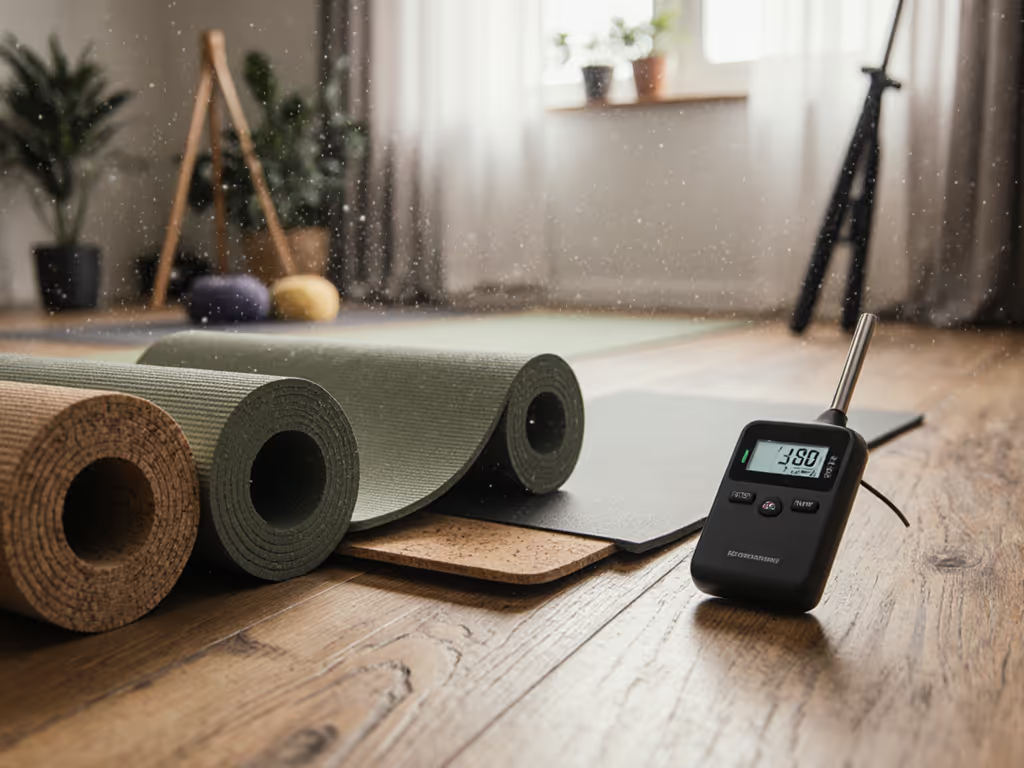
Now, here's where materials science meets hard decisions. I've evaluated mats across natural rubber, cork, thermoplastic elastomer (TPE), and various polyurethane formulations. Each texture approach reflects a different engineering philosophy.
Natural rubber's inherent stickiness (especially when lightly textured with a raised dot or line pattern) creates excellent dry grip and feels luxurious underhand. But in high-humidity or very hot conditions, that same stickiness can become too intense, causing hand fatigue and making transitions choppy rather than fluid. Additionally, natural rubber's manufacturing and agricultural footprint are significant; sourcing transparency matters tremendously here if sustainability matters to you. For a material-by-material breakdown of performance and eco impacts, read PVC vs natural rubber yoga mats.
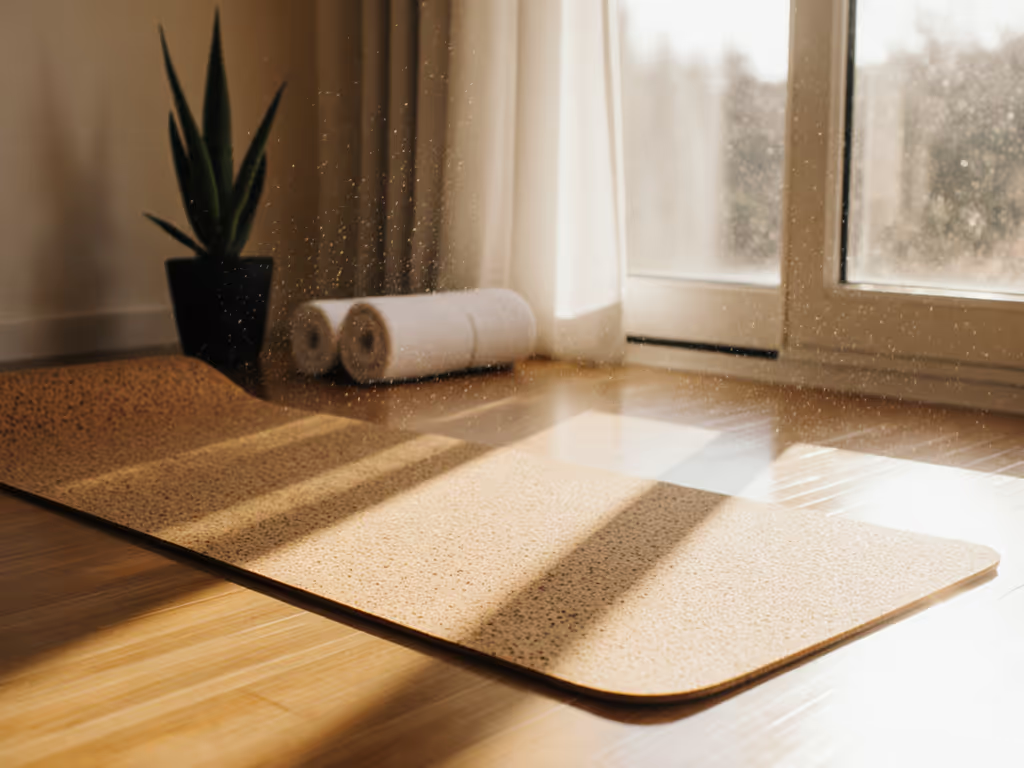
Cork-topped mats leverage cork's natural microbiology and texture. Cork is porous, renewable, and feels warm underhand. However, cork absorbs and releases moisture slowly, and its grip properties plateau in very wet conditions; beyond a certain sweat level, it doesn't improve like engineered PU does. Cork's brittleness also means the texture degrades faster than synthetic alternatives, especially if you practice aggressively or clean aggressively.
PU surfaces, when engineered thoughtfully, offer the most dynamic grip response across moisture and temperature ranges because designers can fine-tune the cell structure, add absorptive vs. repellent layers, and optimize surface texture specifically for moisture interaction. The catch: not all PU is created equal, and cheap PU formulations often produce the chemical smell and off-gassing complaints that give synthetic mats a bad reputation. Sourcing and manufacturing standards matter enormously.
A memory from a community studio years ago: a student unrolled a mat marketed as "eco" that smelled sharply of solvents. We paused class, opened windows, and I took samples home for analysis. The lab readings showed harmless but intense odorants (volatile organic compounds, or VOCs, from the manufacturing process), yet the grip under my fingers was genuinely superb. That day crystallized something: sustainability works when materials perform well enough to stay in use longer. A low-odor mat that fails after six months isn't more sustainable than a higher-odor mat that endures for years. Context is everything.
Designing for Consistency: How Mats Combat Slipping
The best engineered mats now use layered approaches. A moisture-absorbing top surface handles the grip challenge. A stable, cushioned midsection provides the comfort foundation. A nonabsorbent barrier between layers protects lower cushioning from moisture migration. A base layer with appropriate grip (but designed differently than the top) ensures the mat stays planted on various flooring types (hardwood, tile, carpet).
Skin texture yoga mat interaction varies not just between people but on the same person across the mat. Your palm's texture differs from your fingertips; your feet have callused areas and sensitive areas. An effective mat texture accommodates this diversity rather than optimizing for one imaginary "average" hand.
Standard mat thickness ranges from 3-6 mm; many practitioners find 4-5 mm (roughly one-sixth to one-fifth inch) a reasonable compromise between cushioning and stability connection to the floor. Thicker doesn't always mean better grip, as a very thick, spongy mat can actually increase slipping in standing poses because the surface compresses under your weight, reducing the micro-interlocking effect between skin and texture.
Sustainability With Receipts
All of this matters because a mat you trust enough to stay in your regular rotation for five years is vastly more sustainable than two mats you bought and discarded in frustration. Not sure when declining grip means it's time to replace? Check our grip fails over time guide. Poor grip drives replacement; poor durability drives replacement; poor feel drives replacement. A mat engineered for consistent grip across real-world conditions, made from durable materials with transparent sourcing, and backed by performance claims you can actually verify (that's sustainability with receipts).
When evaluating mats, ask specific questions: What's the top layer material and why was it chosen for your climate and practice type? What's the barrier or insulation layer protecting the base? How does the manufacturer measure and verify grip? Do they test across moisture and temperature ranges, or just in a controlled lab? What's the actual off-gassing profile, and have VOCs been third-party tested? Are the materials traceable, and what certifications exist?
The absence of a marketing buzzword isn't a weakness (it's a sign that the designer cared more about materials science than storytelling). Material names matter less than verified formulations and context. A PU mat from one maker that performs beautifully in hot yoga isn't comparable to a different PU mat that slides in humidity; the chemistry, texture design, and layer architecture are what count.
Moving Forward
The next time you roll out your mat and feel the resistance under your hands, you're experiencing the result of material engineering decisions made months or years earlier. Those decisions cascade through your practice: whether you feel secure in inversions, whether your wrists and knees get the right support, whether you're breathing in off-gassing chemicals or clean air.
Understanding yoga mat texture biomechanics transforms you from a consumer of mats into an evaluator of systems. You can now ask the right questions, recognize the trade-offs implicit in every design choice, and choose a mat that genuinely fits your practice rather than hoping you've picked the right one.
Start by testing mats under conditions that matter to you (warm, sweaty, in your actual practice space if possible). Feel for consistent grip across the mat's surface. Notice whether moisture increases or decreases stability. Observe how the texture responds to your specific hands and feet, not anyone else's. And don't settle for "it feels okay"; feel for that moment when you trust the mat completely, when grip stops being a thought and becomes just another part of your foundation.
That's the real measure of grip biomechanics: not laboratory numbers, but the silence when your mind stops worrying about slipping and returns to the breath.
Related Articles