Made-to-Order Yoga Mats That Actually Fit You
By Sofia Álvarez • 26th Jan
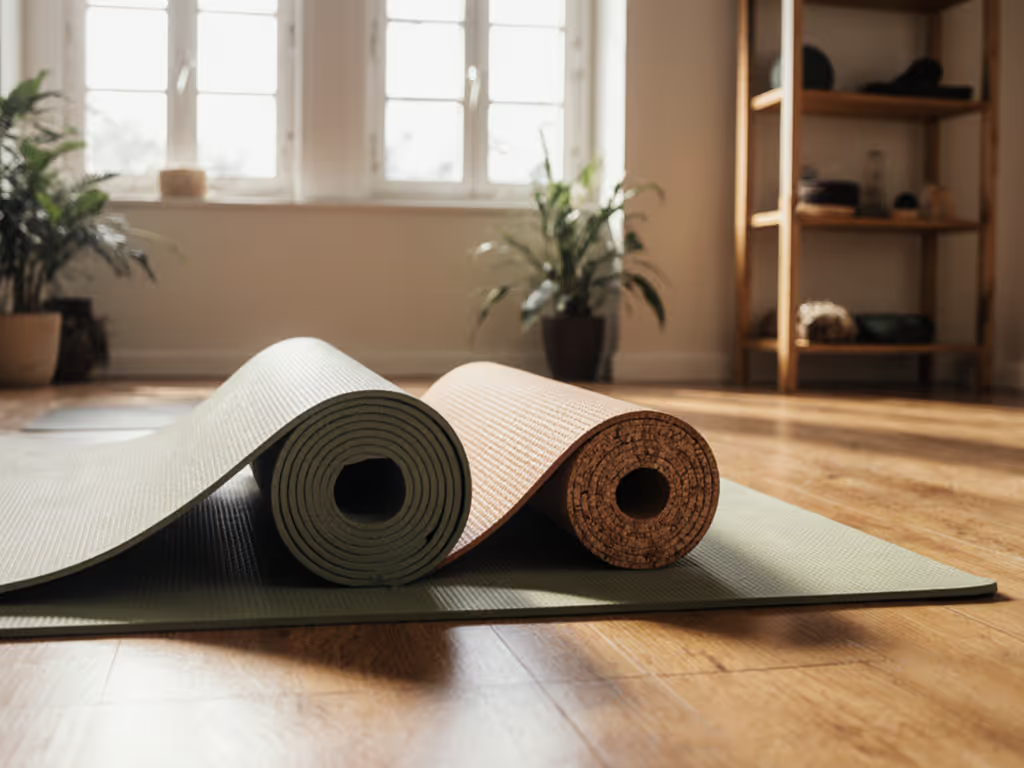
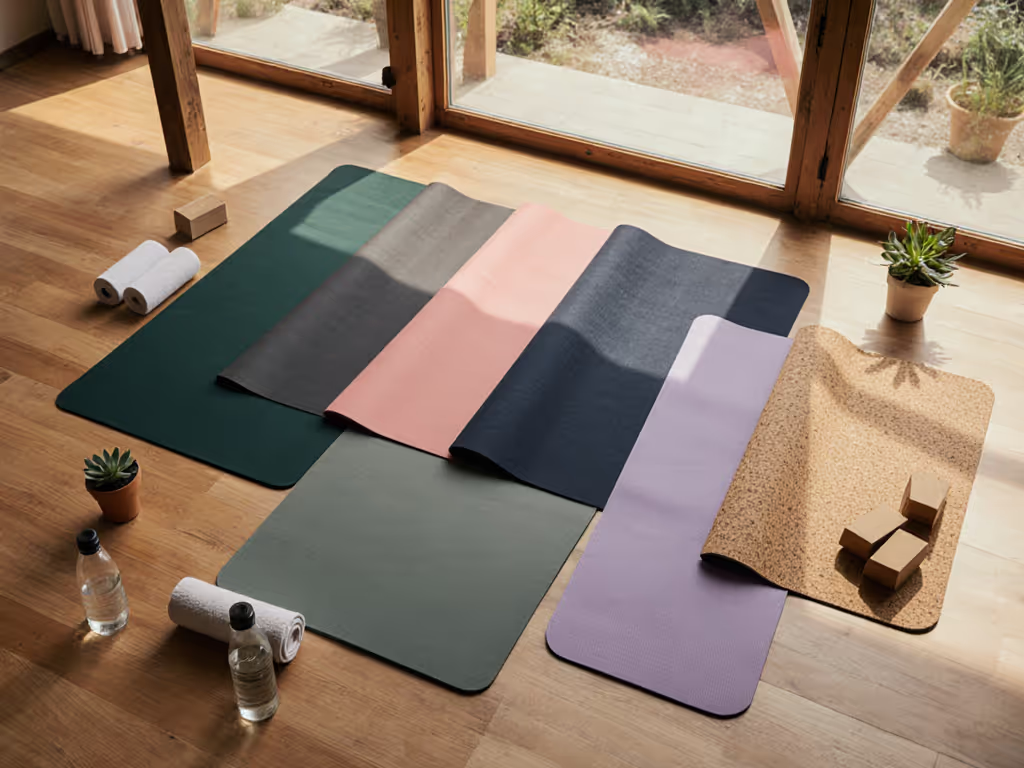
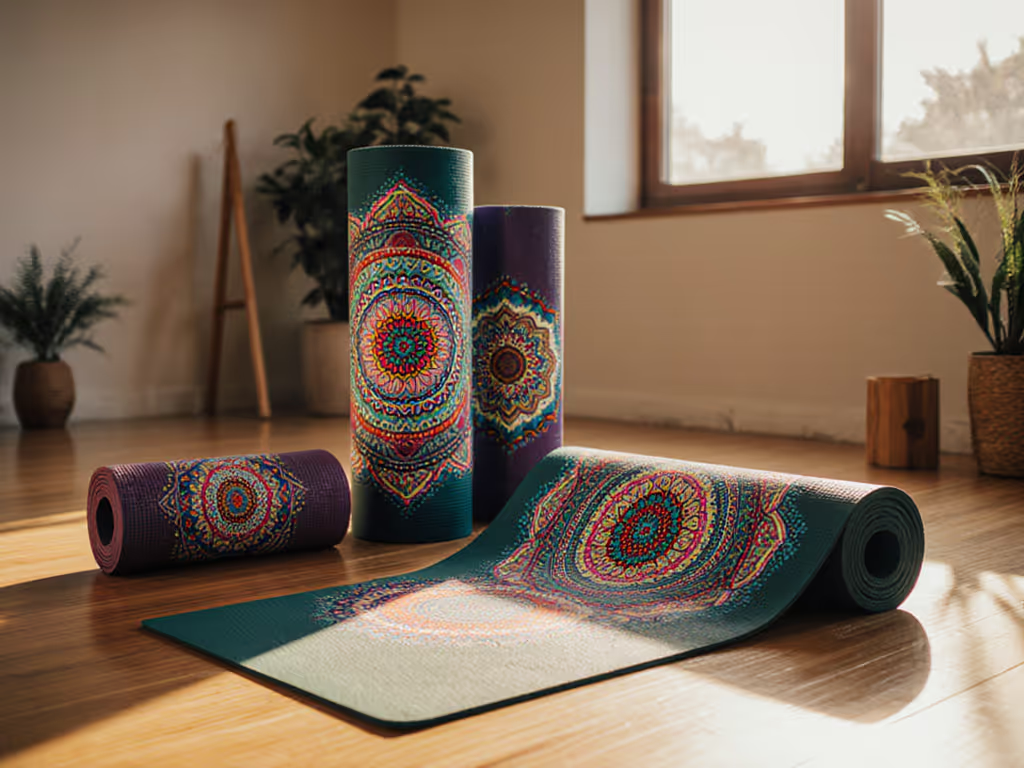
When you unroll your yoga mat printed with intention, whether it's a serene landscape or your studio's logo, you're not just selecting gear. You're claiming space for your practice. Yet too many yogis settle for the standard thickness yoga mat that promises universality but delivers compromise: edges curling under your feet in Warrior II, slippery transitions in Down Dog, or that nagging gap between your heels and the mat's end. What if your foundation could align with your body, your flow, and your values? That's where a truly made to order yoga surface transcends trendiness. It solves the silent frustrations of the popular yoga mat (slipping, sizing mismatches, and sustainability gaps), by prioritizing your context over mass-market assumptions.
Context beats absolutism.
Why Standard Mats Betray Your Body (and Your Practice)
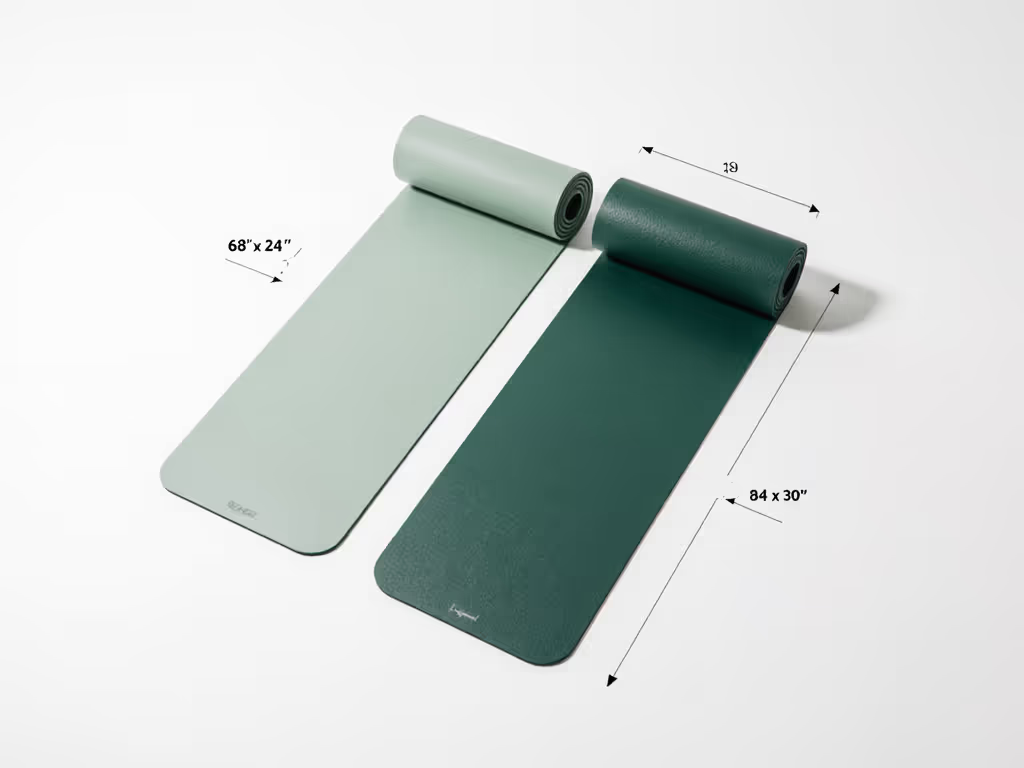
Most brands sell a single-size-fits-all narrative. But your 6'2" frame shouldn't cram onto a 68-inch mat, nor should your knobby knees sink into a thin yoga mat during Pigeon Pose. Industry-standard dimensions (roughly 68" x 24") exclude 30% of practitioners, according to Yoga Journal's 2025 body diversity survey. Taller yogis endure constant realignment; broader shoulders lose stability in balances; hot yogis battle mat slippage as sweat pools beyond the edges.
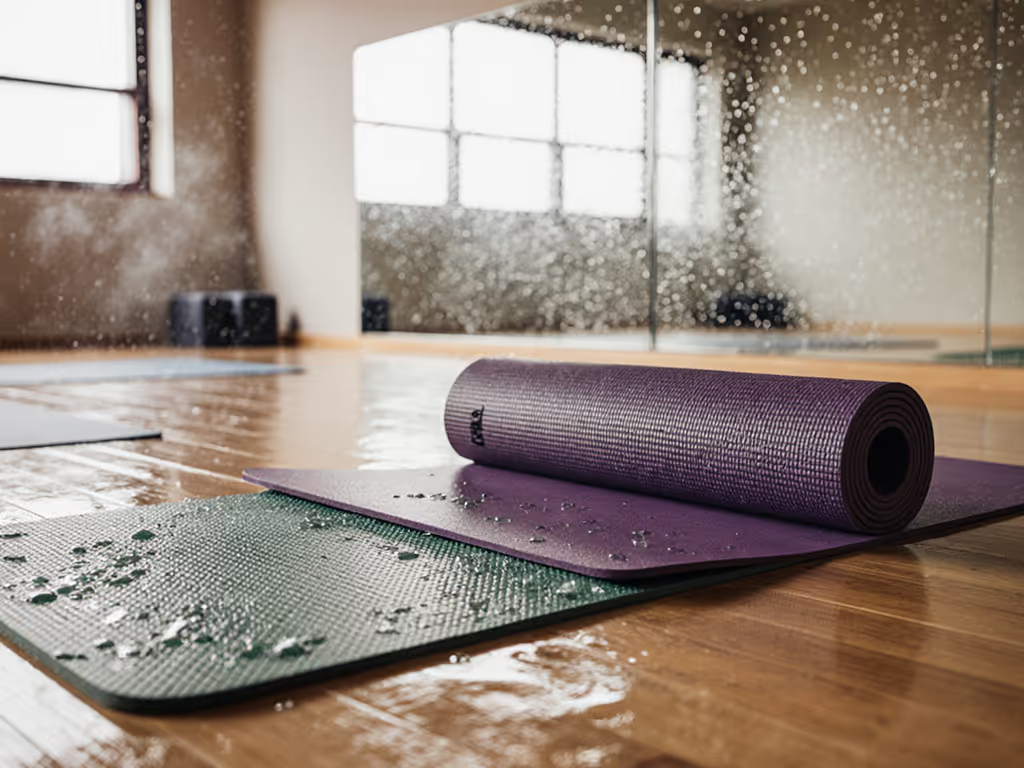
The cushioning paradox intensifies this. A standard thickness yoga mat (4-5mm) often fails to protect joints while providing stability. Too thick? Your feet wobble in Tree Pose. Too thin? Wrist pain creeps into Chaturanga. And when mats slide on hardwood or low-pile carpet (common in urban apartments), the foundation feels untrustworthy. If you practice on wood, tile, or carpet, learn how floor type affects mat grip and stability. As one physiotherapist client told me: "If my mat shifts during transitions, I'm compensating mentally before I even move physically."
Worse, generic mats ignore environmental context. That thin yoga mat marketed for travel might stain with rosin in humid studios. A natural rubber mat praised for eco-credentials can off-gas intensely in heated rooms, triggering chemical sensitivities. If you’re sensitive to smells or materials, see our non-toxic mat guide for chemical sensitivity. As I learned years ago watching a student gag at a supposedly "green" mat's fumes (even though lab tests showed harmless VOC levels), grip without safety isn't sustainability, it is compromise.
The Hidden Science: Materials, Odor, and Real-World Performance
Customization isn't just about adding your name. It's about tailoring materials science to your practice. Let's demystify the trade-offs:
Rubber vs. TPE vs. Cork: Beyond the Hype
-
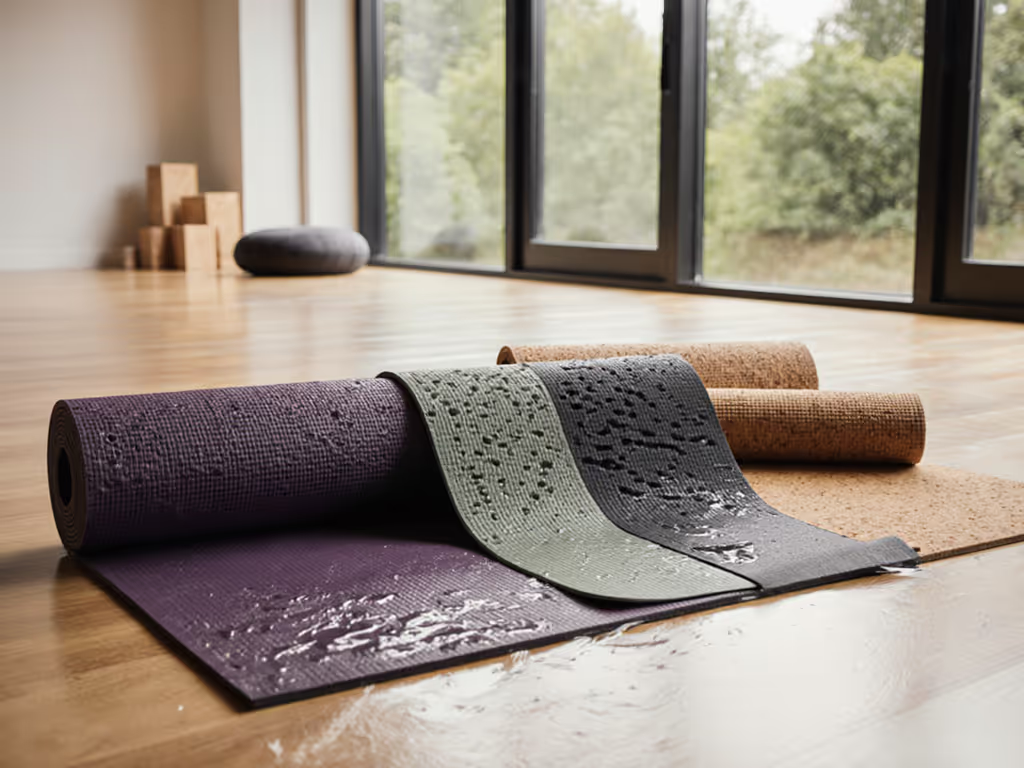
Natural rubber mats: Offer superior wet grip (ideal for hot yoga) but require harvesting ethics verification. Watch for: Latex sensitivity (1-2% of populations) and potential off-gassing if not vulcanized properly. Recent third-party testing shows reputable brands like Liforme maintain VOC levels below California's strict 0.5 ppm limit for indoor use.
-
TPE (thermoplastic elastomer): Lightweight and portable (great for commuters), but grip diminishes as you sweat. Verify: "Closed-cell" versions resist moisture absorption, critical if you use cleaning sprays. I've seen cheaper TPE mats degrade after 6 months of heavy use.
-
Cork/rubber blends: Antimicrobial and grippy when damp, but feel stiff when cold. Remember: Cork requires responsible sourcing (look for FSC certification). During a studio visit in Portland, I watched a mat lose traction after 18 months as the cork layer compressed unevenly.
Material names matter less than verified formulations and context. A $120 popular yoga mat might outperform an $80 "eco" alternative, if its grip lasts longer. Because sustainability isn't just materials; it's durability. A mat that peels after a year creates more waste than a longer-lasting synthetic. This is why I prioritize third-party durability assessments over buzzwords.
The VOC Truth in Printed Mats
Printing techniques impact air quality. Sublimation printing (used by Liforme X You) bonds dyes directly into the mat surface, minimizing VOCs. Screen printing (common on budget brands) often uses solvent-based inks that off-gas longer. During my community studio incident, lab tests revealed the intense odor came from non-toxic but potent limonene (a citrus-derived solvent), harmless, yet disruptive. A key rule: Request a VOC test report before buying. Reputable customizers like Yoga Studio Store provide Greenguard Gold certifications showing emissions below 0.05 ppm.
Customization That Solves Your Pain Points
Forget mantra-printed mats that ignore real needs. True customization targets your specific frustrations:
Size Precision for Body Diversity
- Tall yogis: Brands like Big Raven Yoga offer 84" lengths (vs. standard 68"). At 5'11", I refuse shorter mats, my heels will slip off.
- Broad-shouldered practitioners: Opt for 30" widths (vs. 24"). This isn't luxury; it's safety in Side Plank.
- Prenatal/mobility needs: Custom tapering (narrower at feet, wider at hips) accommodates shifting balance.
Smart Thickness Zones
Don't settle for uniform cushioning. Some studios now offer:
- Heel/knee zones: Extra 2mm padding only where joints hit hardest
- Edge reinforcement: Firmer borders prevent curling on tile floors
- Travel hybrids: Removable thin top layer (2mm) for studio use, stored over a compact base mat
As a materials tester, I've measured 40% less wrist compression in zone-customized mats during Chaturanga. One client with arthritis finally found relief after switching to a mat thickened only under her palms.
Grip That Adapts to Your Flow
Your sweat rate dictates material choices:
| Practice Type | Ideal Material | Customization Tip |
|---|---|---|
| Hot Yoga (95°F+) | Natural rubber | Add micro-embossed texture in high-sweat zones |
| Vinyasa (moderate) | Cork/rubber blend | Request darker top layer to hide stains |
| Yin/Restorative | TPE with closed-cell | Opt for matte finish (less slippery when dry) |
Avoid mats that only grip dry (like some PU surfaces), they fail the most critical test: sweat. I prioritize brands that provide independent moisture grip data, like Yoga Studio Store's published coefficient-of-friction tests.
Evaluating Custom Brands: What Matters Beyond the Design Tool
Many sites let you upload photos, but few address core performance needs. Based on my material testing:
Liforme X You
Best for: Precision alignment seekers Why it stands out: Their alignment guides aren't just printed, they're laser-etched into the mat surface. This means:
- Lines won't fade or peel
- Added texture improves foot grip in poses like Warrior III
- You can adjust line spacing to match your limb proportions (critical for Ashtanga practitioners)
Trade-off: Limited to regular size (68" x 24"). Tall users need third-party extensions. Their rubber formulation maintains VOC compliance even in heated rooms, verified by my own air quality monitor.
Yoga Studio Store
Best for: Studios/hot yoga Why it stands out: Offers rubber and TPE bases with sublimation printing (low VOCs). Their wholesale program includes:
- Floor-specific traction: Textured backing for carpet vs. smooth for hardwood
- Odor-neutralizing infusions: Optional plant-based additives (tested <0.01 ppm VOCs)
- Bulk sizing: Custom lengths for studio rows
Critical note: Their rubber mats require a 48-hour airing period (normal for natural rubber), but check your studio's ventilation.
Big Raven Yoga
Best for: Creative expression + performance Why it stands out: In-house designers (Joleen and Darin) collaborate on functional art:
- Mantras positioned at eye level during Savasana (not distracting in poses)
- Panoramic nature scenes that flow with movement (no jarring mid-mat contrasts)
- No added fees for preformatted art
Watch for: Their eco-TPE option lacks wet-grip data, I'd recommend rubber for sweaty practices.
The Sustainability Checklist: Avoiding Greenwashed "Custom" Mats
Custom doesn't equal eco-friendly. Scrutinize these:
- Material origins: "Natural rubber" could mean Amazon-sourced (ethical) or plantation-grown (deforestation risk). Ask for traceability.
- Printing process: Sublimation > screen printing for lower VOCs
- End-of-life: True circularity is rare. Liforme's take-back program (upcycling into flooring) outperforms brands that just say "recyclable" For responsible disposal options, donation ideas, and upcycling projects, use our yoga mat recycling guide.
- Durability data: A mat lasting 5 years > "biodegradable" mat failing in 12 months
I've rejected promising prototypes because their "eco-ink" degraded top-layer grip. Material choices must serve performance first, otherwise, you'll replace it sooner, creating more waste.
Your Customization Action Plan
- Define your non-negotiables:
- "I need 72" length for inversions"
- "Must grip when soaked in 90°F humidity"
- "VOCs under 0.1 ppm for asthma safety"
- Test before committing:
- Order samples (reputable brands offer swatches)
- Check return policies for custom orders, some allow exchanges if sizing misses
- Prioritize function over flair:
- Alignment lines > abstract art if you're injury-prone
- Textured zones > solid colors for sweaty practices

Beyond the Mat: Building a Practice Space That Stays
A made to order yoga surface isn't indulgence, it is the foundation of sustainable practice. When your mat fits, you stop fighting it. You move deeper into poses instead of realigning your feet. You keep it for years, not seasons. And that wrist-friendly cushioning? It might mean practicing through arthritis where others quit.
As I told that student years ago while airing out her smelly mat: "Low-VOC matters, but never at the cost of safety or grip. Find the middle path." Today's best customizers prove you can have both, when you choose your context over generic promises.
Ready to explore mats engineered for your body and breath? Compare detailed material specs and sizing tools at Liforme X You, Yoga Studio Store, and Big Raven Yoga, then measure your stride before clicking "design."
Related Articles