Large & Thin Yoga Mats: Flooring Transition Grip
By Aiko Tanaka • 4th Apr
Large and thin yoga mats offer a practical solution for practitioners navigating multiple flooring types and prioritizing consistent grip across transitions. By combining an oversized footprint with a 1.5-4mm thickness profile, these mats maintain ground connection and stability while accommodating taller bodies and providing the portability that studio or home-based yogis increasingly demand.
Why Flooring Transitions Demand a Rethink on Mat Selection
Yoga isn't practiced in a vacuum. Most practitioners move between spaces - from the studio to a home with hardwood floors, then perhaps to a friend's apartment with tile or carpet. Each transition introduces friction variables that your mat must negotiate.
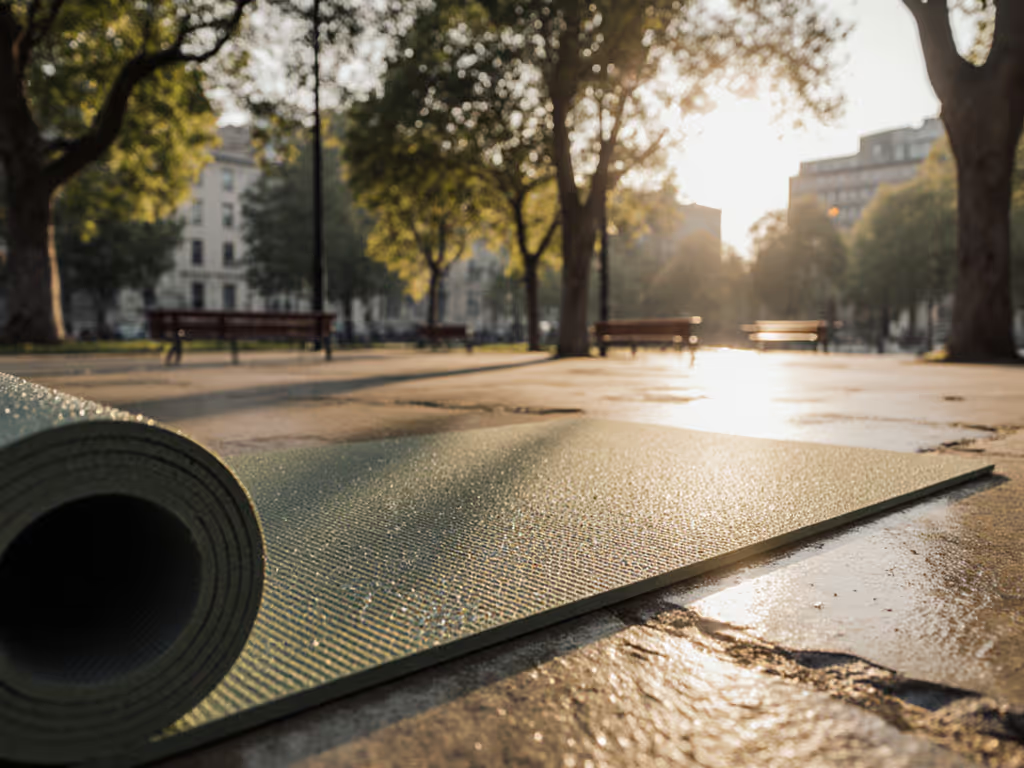
A mat that grips confidently on studio flooring may hydroplane on tile when you're in a sweaty flow. Conversely, a mat optimized for carpet can feel unstable on polished wood. The real test isn't lab adhesion - it's whether your hands stay planted during a vinyasa when you've shifted from one room to another mid-practice. For surface-by-surface tips on preventing slips, see our yoga mat floor compatibility guide.
Large, thin mats sidestep this inconsistency trap. Their reduced bulk (typically 1.5-3mm) keeps you closer to the actual floor beneath, which means your grip is less dependent on the mat's top texture alone. The mat becomes a responsive layer rather than a buffer, distributing your weight more consistently across surface variations. A fact confirmed by field observations and user reports: thinner mats provide superior ground connection, which translates to steadier transitions between rooms or studios.
FAQ: Understanding Large, Thin Mats for Real-World Practice
What exactly is a large yoga mat, and does it affect grip?
A large yoga mat typically measures 73" to 85" in length and 30" - 36" in width - significantly larger than the standard 68" × 24" mat. This extra real estate serves several purposes. For taller practitioners or those practicing power vinyasa, it eliminates the need to reposition mid-flow. For flooring transitions, the expanded footprint means you're less likely to slip off the mat's edge when shifting your stance from one room to another.
Size alone doesn't determine grip, but it does influence how your weight distributes. When a large mat is also thin (1.5-4mm), you achieve a unique balance: enough coverage to feel secure during expansive arm movements, yet thin enough that your feet maintain genuine feedback from the floor surface underneath. This feedback becomes your proprioceptive anchor, especially important when surfaces change midway through practice.
How does thin yoga mat thickness compare to standard mats for stability in transition zones?
Thin mats range from 1.5-3mm (the most portable tier) to 3-4mm (still lightweight, but with marginally more ground feel). Standard mats typically sit at 5-6mm or thicker. The difference matters in transitions.
When you step from hardwood onto tile during a sun salutation, a standard thick mat (5-6mm) absorbs more of the floor's tactile cues. You're insulated, which feels cushy in static poses but creates instability during flowing sequences on unfamiliar surfaces. Thin mats compress less and flex more dynamically with foot placement, so your proprioception - your sense of where your body is in space - stays sharper. Research on balance poses confirms that thinner mats provide more direct ground connection, allowing practitioners to feel subtle shifts in weight distribution. For a deeper breakdown of thickness trade-offs, explore our complete guide.
For hot yoga and high-sweat practices, this feedback loop is critical. Field heat is the truth serum for mat grip. A mat thick enough to cushion but thin enough to stay responsive becomes your safety net when sweat increases foot or hand slippage potential.
What about consistency across surfaces when moving between studio and home?
Consistency is the hidden pain point that standard-thickness mats can't fully solve. A 6mm mat on carpeting feels solid, but on tile, it can shift laterally if your weight placement is off-center. A thin mat, by contrast, locks to its underlying surface more uniformly - less material to compress unevenly.
Large, thin mats excel here because:
- They reduce the "sinking" sensation that causes inconsistent grip across different floor rigidities
- Their extended footprint gives you more surface contact area, diluting the impact of small floor variations
- Thinner construction means shorter break-in periods and more predictable performance from day one
In studio settings with mixed flooring (common in multipurpose spaces), this versatile yoga surface approach becomes an asset. You're not fighting the mat; you're working with it.
Does a thin yoga mat sacrifice cushioning that practitioners with joint sensitivity need?
This is where common mat selection breaks down. The choice isn't binary.
Thinner mats (1.5-3mm) do provide less cushioning than 8mm+ luxury options. However, this assumes all joints need identical support. For most practitioners engaging in vinyasa, power, or hot yoga - styles emphasizing flow and transitions - the 3-4mm range offers a sweet spot. These mats provide enough material to buffer the sting of a wrist plant on tile, without the thickness that destabilizes balance poses.
A popular yoga mat choice among instructors rotating through back-to-back classes is the 3-4mm profile. Why? Because they handle sweat absorption and dry-down timing without the density that traps moisture or odor. A mat tested soaked, trusted dry - one that doesn't harbor water in its core - becomes genuinely safer in a teaching cycle than a thicker mat that takes hours to fully disinfect and dry between classes.
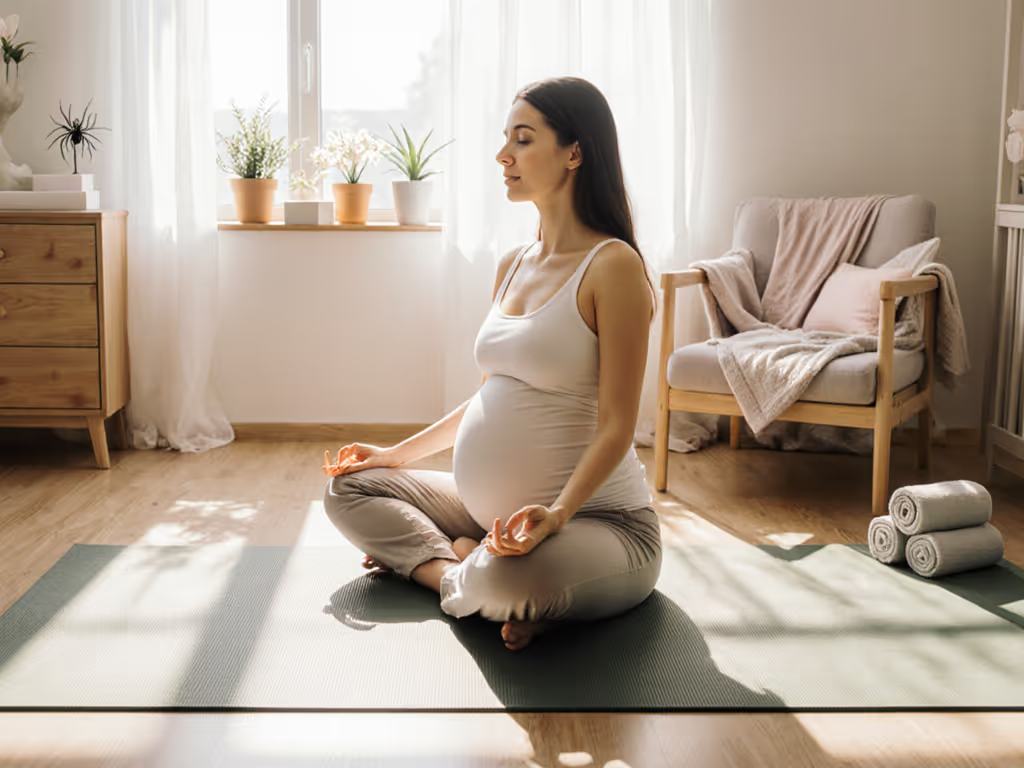
For restorative yoga, yin, or prenatal practice, thick mats (5-6mm and above) remain the better choice. But for yogis navigating flooring transitions and flow-based practice, the 3-4mm profile in a large footprint strikes a credible balance.
How do large, thin mats perform in hot yoga and sweaty practice?
This is where field-tested specifics matter. In hot yoga, two factors dominate: grip under sweat, and how quickly a mat dries between uses.
A thin mat's advantage is its rapid dry-down. Less material means water evaporates faster and more completely, reducing the bacterial and fungal growth risk that plagues thicker, damper mats. Sensory notes: a properly dried thin mat releases no sour smell after 24 hours, while a thick mat stored damp can harbor odor for days.
For grip, heat changes the game. High temperature softens most mat materials slightly, so a mat's top layer loses traction unless it's textured or treated. Thin mats with microtexture or rosin-compatible surfaces maintain grip more consistently because they stay cooler (less insulation) and dry faster (less water retention). The paradox: less thickness sometimes means better sweat management.
Thickness recommendations for hot yoga confirm this: 3-4mm provides stability and grip while managing sweat effectively. Thicker mats in hot environments often become tacky and prone to slipping once saturation exceeds a threshold. For sweat-proof options we’ve lab-verified, see our non-slip hot yoga mats.
Will a large, thin mat slide on carpet, tile, or hardwood flooring?
Sliding depends on three factors: mat materials, floor texture, and weight distribution.
Large mats have an inherent advantage: distributed weight. Your practice weight is spread across more surface area, so localized pressure points are reduced. This means less tendency to bunch or buckle, common problems with standard mats on slippery floors.
On tile, a thin mat with a rubberized base (TPE or natural rubber) grips well. On hardwood, light wood oils can reduce traction, but a mat's top layer (not its thickness) determines grip - so this isn't a thickness issue. Carpet presents the opposite challenge: too much friction, not too little. A thin mat on high-pile carpet can feel grounded but may require a towel overlay if sweat increases slippage.
Safety-forward practice means testing your mat on your floors before a committed buy. Renting or borrowing a large, thin option for a week reveals real-world performance that specs alone can't predict. Grip isn't a promise beyond documented test conditions; it's a sensory experience tied to your exact room, climate, and practice intensity.
How portable are large yoga mats compared to standard sizes?
This is the trade-off practitioners often misunderstand. A large mat (73"-85" long) by definition isn't as packable as a 68" standard. However, thinness compensates.
A thin large mat (1.5-3mm) rolls more compactly than a standard thick mat (5-6mm). The volume difference is significant: a 3mm large mat might weigh 4-5 lbs and roll to roughly a large water bottle's width, while a 6mm standard mat can exceed 8 lbs and roll thicker.
For urban practitioners commuting to studios or those who practice in multiple locations, a popular yoga mat trend is the 73" × 30" thin mat. It fits most car trunks, airplane carry-ons, or tote bags. If portability is a priority, compare our lightweight travel mats that grip. It doesn't sacrifice practice real estate. It remains light enough for daily transport.
The sensory note on portability: lightweight mats are quieter in transit (less noise in apartment hallways or subway cars), and they're easier to carry with one hand, reducing repetitive strain on shoulders during commutes.
Practical Comparison: Large, Thin vs. Alternatives
| Factor | Large, Thin (3-4mm) | Large, Thick (6mm+) | Standard, Thin (1.5-3mm) |
|---|---|---|---|
| Flooring Transition Grip | Excellent (responsive feedback) | Good (but less proprioceptive feedback) | Good (but limited footprint) |
| Joint Cushioning | Moderate (adequate for flow styles) | Excellent | Minimal |
| Portability | Excellent | Poor | Excellent |
| Dry-Down Time | 4-8 hours | 12-24 hours | 4-8 hours |
| Hot Yoga Performance | Excellent (stable, quick-drying) | Fair (slower drying, potential slippage) | Excellent (but narrower platform) |
| Stability in Balance Poses | Excellent | Good (but over-cushioned) | Excellent |
| Storage in Small Spaces | Good | Poor | Excellent |
Making Your Choice: Flooring-Specific Guidance
Hardwood Floors: A large, thin mat with a natural rubber base locks well to wood without requiring extra grip aids. Sensory feedback from the hardwood beneath supports balance. Aim for 3-4mm.
Tile or Concrete: Choose a large, thin mat with TPE or reinforced rubber top. Thinner profiles stay cooler and grip more consistently on cool surfaces. Test before purchase, as some tile finishes are slicker than others.
Carpet (Low to Medium Pile): A thin large mat can feel too anchored to carpet fibers, reducing your ability to transition smoothly. Consider a 3-4mm mat with a slicker base, or use a non-slip rug pad underneath if your practice emphasizes flowing movements.
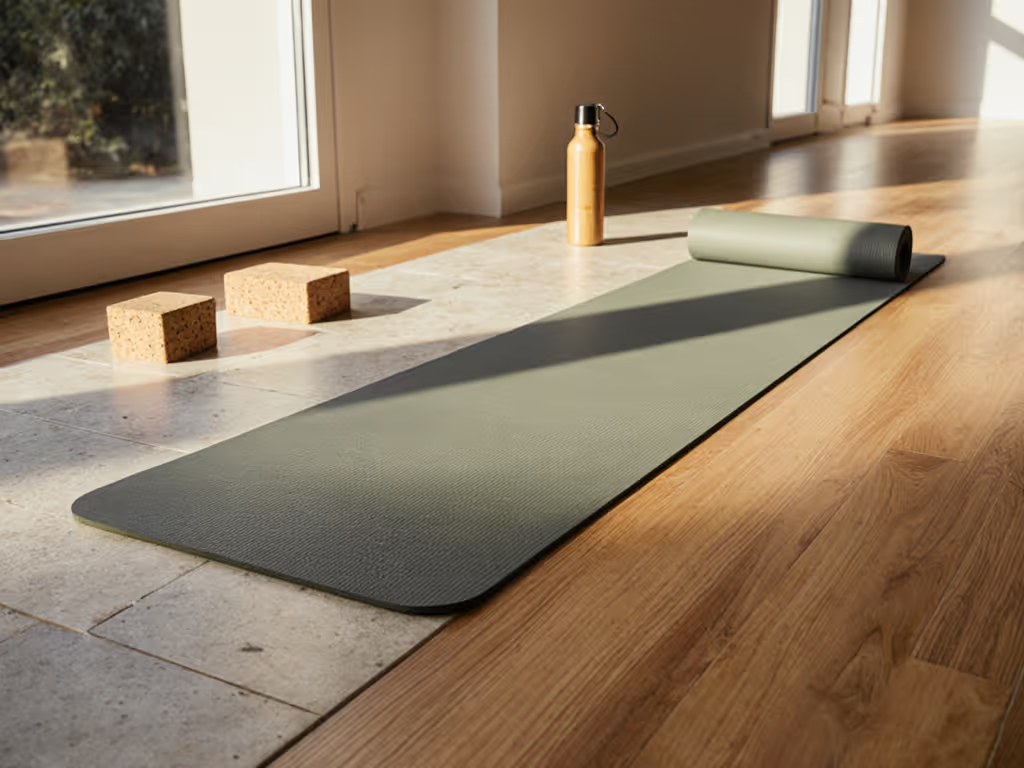
Mixed Flooring: This is where large, thin mats earn their place. The extended footprint lets you position the mat to align consistent surfaces (e.g., keeping your entire practice area on hardwood rather than straddling hardwood-to-tile). Thinness ensures grip consistency regardless of micro-variations in floor condition.
What to Investigate Before Buying
Before committing to a large, thin mat, audit these specifics:
- Top-layer material: Is it PU, natural rubber, TPE, or cork? Each dries at different rates and grips differently when wet.
- Break-in period: Does the mat require salt scrubs or special prep before it's usable? (Tested soaked, trusted dry applies to break-in durability too.)
- Off-gassing: Smell the mat in store or ask the retailer about VOC certifications. Hot environments intensify off-gassing.
- Cleaner compatibility: Can you use your preferred disinfectant without degrading the surface or voiding the warranty?
- Return and trial periods: Most large, thin mats aren't cheap. A 30-day return option reduces financial risk during the real-world test phase.
- Warranty: Does it cover peeling, delamination, or compression over 1-2 years? Thin mats under heavy use can compress faster than thicker options.
Actionable Next Steps
If you've identified flooring transitions and sweat management as your core pain points, start here:
-
Measure your practice spaces. Note flooring types, room temperature (or typical heat during practice), and humidity levels. This data clarifies whether a large, thin mat will perform consistently in your environments.
-
Rent or borrow a large, thin mat (3-4mm) for one week. Test it during your typical practice, in all rooms where you use it. Pay attention to grip after 15 minutes of sweat. Notice whether it locks to the floor or drifts during transitions. Smell it after 24 hours of drying to assess odor potential.
-
Compare dry-down times directly. If you're rotating between home and studio practice, time how long it takes your borrowed mat to fully dry. Cross-reference against thicker mats you've used. Real data beats marketing claims.
-
Prioritize materials transparency. Before checkout, ask for the mat's material composition, manufacturing country, and any third-party testing for emissions or durability. A large yoga mat in your home is a long-term investment - you're entitled to know exactly what you're investing in.
-
Map your transition pattern. Plot which flooring your mat will touch most during practice. If 70% of your flow happens on one floor type, ensure your candidate mat excels on that surface first. Consistency across surfaces begins with honesty about where the real work happens.
Field heat is the truth serum for mat grip, and real floors are the truth serum for mat choice. A large, thin mat that holds its own in the worst conditions - sweat, transitions, competing floor textures - frees your mind to practice rather than troubleshoot. That's the foundation of reliable yoga, not the exception.
Related Articles