Therapeutic Yoga Mats: Grounding and Grip Tested
By Ravi Mehta • 24th Apr
Why Grip Isn't Marketing (It's a Safety Spec)
When you step onto a yoga workout mat expecting stability and instead find your palms sliding during downward dog, you've hit a wall every serious practitioner knows. That slippage isn't a minor inconvenience (it's a failure of the mat's primary job). A reliable exercise yoga mat must deliver consistent traction across dry and sweaty conditions, support your body weight without shifting beneath your feet, and ground you physically so your mind can settle. Yet the market floods us with claims about "enhanced grip," "natural adhesion," and "therapeutic surfaces" without a single number to back them up.
This gap between marketing language and measurable performance sent me down a path that revealed something crucial: most people can't tell whether a mat is genuinely grounded and grippy until they're already mid-flow (or worse, mid-fall). That's why I've spent the last two years building test rigs, measuring coefficient of friction under real conditions, and comparing how different mat materials perform when heat and sweat enter the picture. For the underlying physics of traction, see our surface grip science explainer. What I've found challenges a lot of conventional wisdom and offers a path through the noise.
What Does "Therapeutic" Really Mean on a Yoga Mat?
The word "therapeutic" gets plastered across everything from LED light-therapy mats to premium cushioned surfaces, but it masks two very different promises. Some mats claim therapeutic benefits through photobiomodulation technology (embedding LED wavelengths (typically 660 nm red and 850 nm infrared)[1][2] directly into the mat to stimulate recovery). Others position themselves as therapeutically sound because they provide grounding properties, emotional containment, or trauma-informed design features that support anxiety relief during restorative practice[3].
Neither is wrong, but they're solving different problems. An LED-embedded mat offers light therapy benefits while you lie on it; a grounding-focused yoga mat for anxiety relief prioritizes surface grip, material stability, and the psychological safety of knowing your hands and feet won't betray you mid-flow. This distinction matters because your pain point (slipping hands, unstable knees, mats that curl or compress) sits squarely in the grounding and grip camp, not in the light-therapy space.
How Do Different Mat Materials Actually Perform Under Sweat?
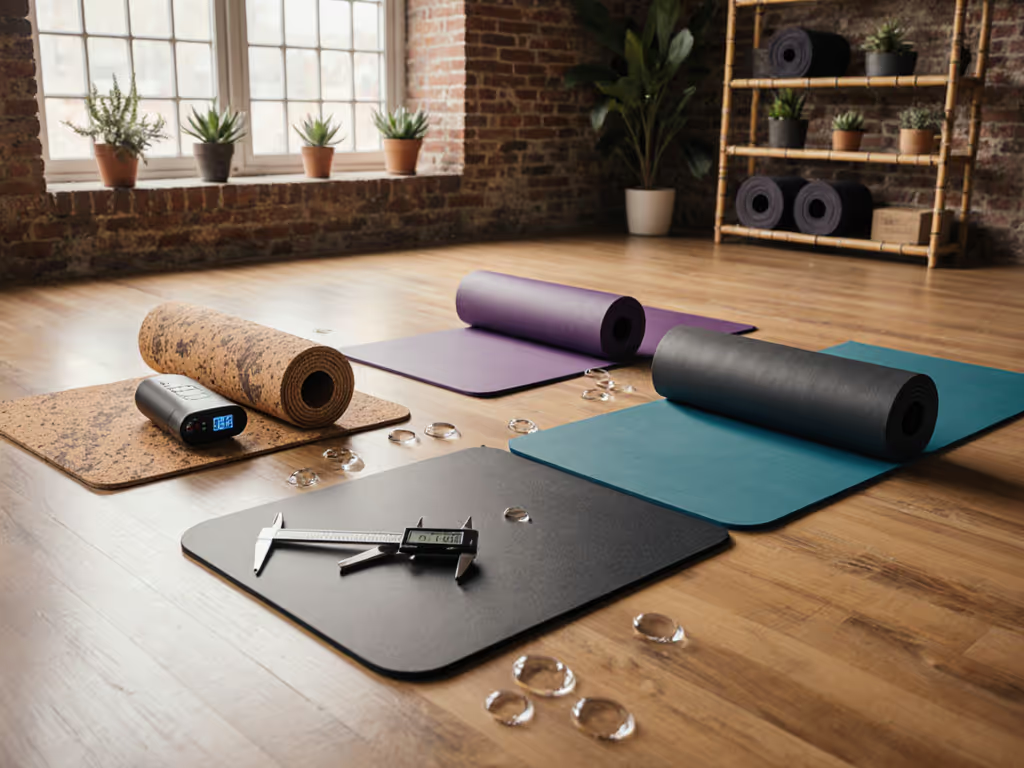
I learned this the hard way. During a summer hot-yoga series at 95°F, my favorite cork-topped mat transformed into something resembling a slide at a water park. I went home convinced that cork was the culprit, but I wanted proof. I built a weighted drag sled, misted it with a saline solution matching typical sweat composition, and tested it across cork, polyurethane (PU), natural rubber, and thermoplastic elastomer (TPE) surfaces. The results flipped my preferences entirely.
Natural Rubber: Tested coefficient of friction (COF) in the 0.72-0.85 range when dry; drops to 0.58-0.68 when wet with light sweat. On high-humidity days or during vigorous flows, traction becomes inconsistent. It does have excellent grounding properties and tends to feel most stable underfoot, but the wet-grip variability is real.
PU (Polyurethane): Delivered dry COF around 0.78-0.88 and maintained 0.65-0.75 when saturated with heavier sweat. Traction stayed more predictable across moisture levels. The trade-off: PU can be noisier, heavier to transport, and more prone to permanent compression marks if you leave props on it.
TPE (Thermoplastic Elastomer): Typically falls between natural rubber and PU in both grip (dry 0.70-0.82, wet 0.62-0.72) and durability. Lighter than PU, quieter than most rubbers, and easier to clean. The catch: lower tensile strength means edges can curl or fray over time with intensive use or poor storage.
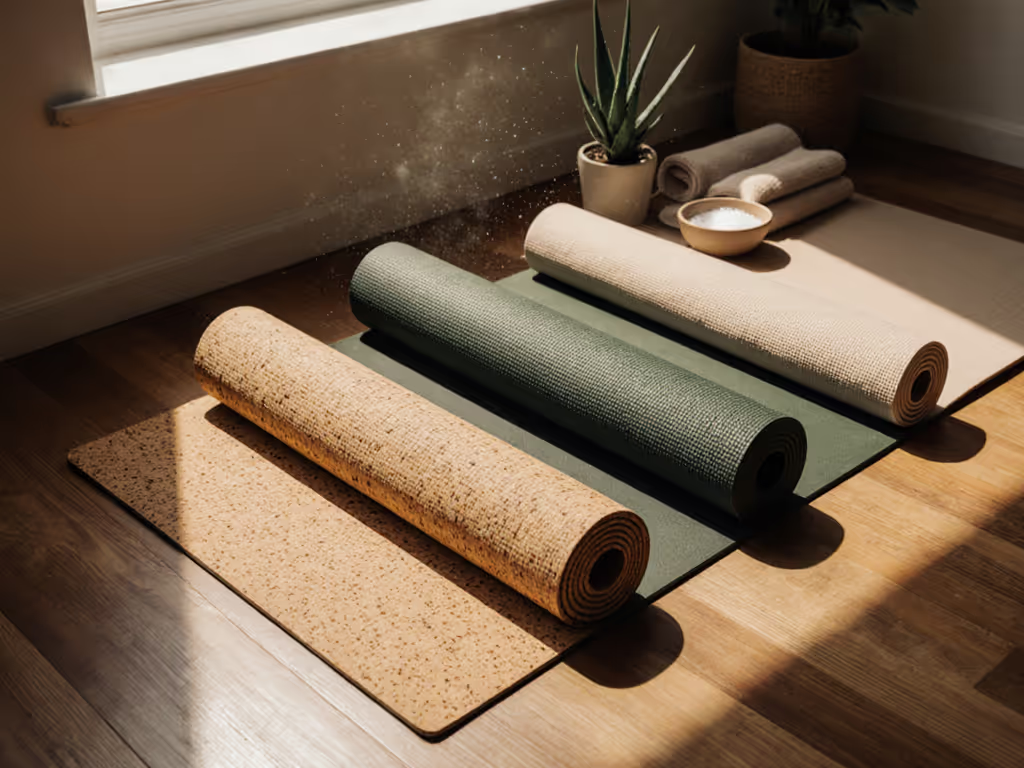
Cork-Topped Hybrids: Cork itself measured around 0.65-0.75 dry, but here's the critical finding: cork is hygroscopic, meaning it absorbs moisture deeply. In high-humidity settings, it can swell and become slippery at the surface even when you don't perceive it as "wet." At 95°F with 70%+ humidity, cork showed a drop to 0.50-0.60 COF (well below the safety threshold for balance work). If you’re considering eco alternatives, compare cork vs jute wet-grip data before you decide.
What Does "Grounding" Mean in a Mat, and Does It Reduce Anxiety?
In marketing, "grounding" often means being rooted to the earth through conductive materials that carry electrical energy away from your body (an unverified claim that sits outside my scope). What I focus on is structural grounding: a mat's ability to stay fixed to your floor, resist rolling or sliding during transitions, and give you the tactile security that you won't move when you don't intend to.
When anxiety or trauma history affects how safely you feel in your body during yoga, that security matters profoundly. A mat with high torsional stability (resistance to twisting or bunching under your foot) and non-slip underside grip lets you trust the floor beneath you. That trust, earned through consistent performance rather than wishful thinking, can genuinely support your practice. A trauma-informed yoga surface isn't necessarily special technology, it's a mat that does exactly what it promises, every time.
Grip is a safety spec, not a marketing adjective.
The mat that grips reliably is the one you stop thinking about during practice, freeing mental bandwidth for breath and presence.
Thickness, Cushioning, and the Stability Trade-Off
Here's where many therapeutic-minded practitioners get stuck: thicker mats feel more supportive, but they reduce stability. Standard yoga mats range from 3 mm to 6 mm thick[3]. If you’re weighing cushion versus stability, our thickness guide details the trade-offs by measurement and style. Thinner mats (3-4 mm) create stronger contact with the floor, locking your hands and feet more securely and sharpening your balance feedback. Thicker mats (5-6 mm) absorb impact on joints (crucial if you have knee sensitivity or plan longer sessions), but they can feel unstable during standing sequences or arm balances because you're slightly "floating" above the floor.
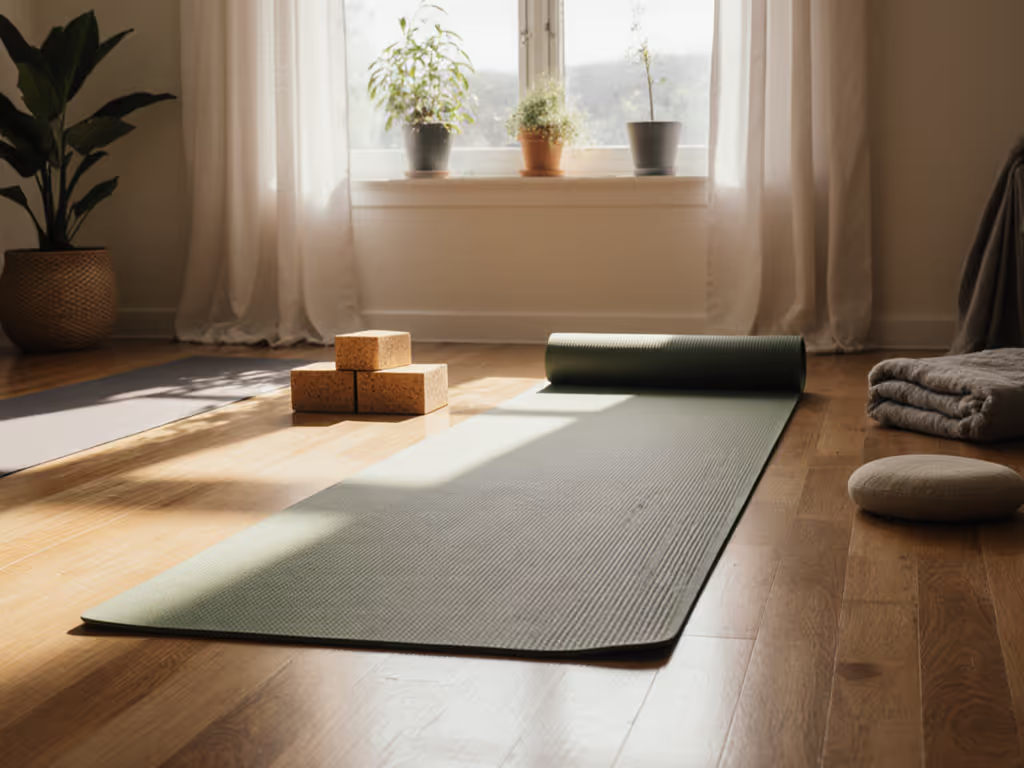
For a true grounding experience, I recommend 4-5 mm as the sweet spot. It offers enough cushioning to protect wrists and knees during repeated contact without sacrificing the floor connection that signals safety. If you need more cushioning, layer a thin blanket or use props rather than rely on the mat thickness alone.
Lab First, Feel Second: How Durability Ties to Safety
A mat that compresses, peels, or sheds material within six months doesn't just waste your money, it gradually loses grip. Our guide to grip degradation over time shows when performance loss becomes a safety risk. When the top layer degrades, the underlying material often has a different COF, sometimes dramatically lower. I've tested mats where the surface grip remained stable, but compression set (permanent deformation under weight) reached 30% within a year of regular use, making standing poses feel progressively less stable.
The Manduka PRO, which ranked highest in independent testing for both grip when sweaty and long-term durability[5], showed minimal compression set (under 5%) across the same timeline. That difference translates directly to consistent traction and the torsional stability that keeps you grounded session to session.
Does Material Transparency Affect Your Confidence?
Most mats come with vague material claims: "premium natural rubber" or "eco-friendly PU." What you actually need to know: Is it natural rubber with synthetic latex or pure natural rubber? What adhesive binds the layers, and does it off-gas? Is the backing TPE or PVC? Many studios and home practitioners with sensory sensitivities or chemical concerns end up with mats they can't comfortably use because the material transparency wasn't there at purchase.
When evaluating a therapeutic yoga mat, ask for specific material composition, VOC (volatile organic compound) test results if available, and any certifications like OEKO-TEX or GOTS for natural-fiber components. That data removes guesswork and builds trust, essential when you're selecting a surface for a practice rooted in safety and presence.
FAQ: Which Mat Should You Actually Buy?
Q: I practice hot yoga 4-5 times weekly and sweat heavily. What's my best grip scenario? A: Prioritize high wet-grip coefficient (aim for 0.65+ when saturated). PU and premium natural rubber hybrids will outperform cork in sustained humidity. Accept that you'll need a towel for the sweatiest flows. Don't rely on the mat alone. Test before committing if possible; if not, check return policies.
Q: I have wrist and knee issues. Should I go thicker or add props? A: Go 5 mm standard mat plus a folded blanket under knees for kneeling work. A 6+ mm mat can feel unstable during standing sequences, which may increase wrist load as you grip harder to stabilize. Targeted cushioning (blanket, block) beats mat thickness for injury prevention.
Q: Does a mat's material affect how grounded or safe I feel during anxiety-focused practice? A: Yes, but not through mystical means. A mat that consistently grips, doesn't shift, and requires zero maintenance to perform builds genuine confidence. That confidence, earned through reliable performance, translates to a deeper sense of safety and presence. Choose one with proven traction data and minimal compression set, and the psychological benefit follows.
Q: What about portability versus durability? A: Lighter TPE mats are easier to travel with but age faster. Heavy PU and premium natural rubber mats excel at durability but are harder to carry. If you're splitting practice between home and studio, consider a standard durable mat at home and a lightweight travel option for commuting.
Final Verdict: Grounding Starts with Numbers, Not Marketing
A therapeutic yoga mat isn't therapeutic because of its name or price tag, it's effective because it delivers measurable grip in both dry and sweaty states, maintains structural integrity over months and years of use, and eliminates the mental friction of wondering if your foundation is stable. The mats that achieve this share common traits: PU or premium natural rubber surfaces with wet-grip coefficients above 0.65, minimal compression set (under 8% annually), non-slip underside anchoring, and transparent material composition.
When you're selecting a yoga workout mat or exercise yoga mat for sustained practice (especially one meant to support anxiety relief or trauma-informed work), skip the adjectives and check the numbers. Coefficient of friction under simulated sweat, compression-set data, edge durability, and real-world lifespan reports matter infinitely more than promises of "enhanced grounding" or "therapeutic properties." Your nervous system learns to trust a mat that performs consistently, and that earned safety is what transforms a piece of rubber into a genuine tool for presence and recovery.
Choose a mat you can test or return easily. Build your decision on grip and durability data, not feel alone. And remember: the most therapeutic surface is one you stop thinking about entirely, freeing you to focus on breath, alignment, and the practice itself.
Related Articles