Thin vs Popular Yoga Mats: Tested in Transitions
By Aiko Tanaka • 27th Feb
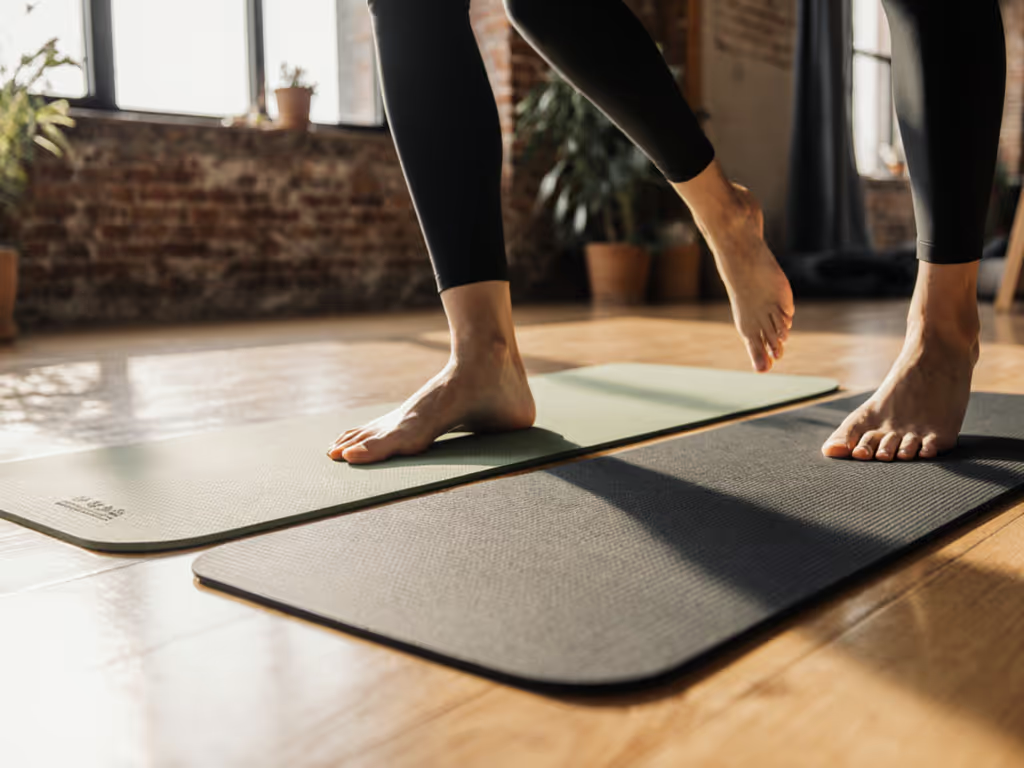
What's the Real Difference Between Thin and Thicker Mats in Flow?
The honest answer: field heat is the truth serum for mat grip. A mat that feels stable during sun salutations in a cool studio can dissolve under your palms mid-vinyasa when sweat pools and room temperature climbs to 95°F. Over months of rotating through back-to-back hot and power classes, I've learned that blanket recommendations about mat thickness miss the practical reality of transitions (those moments where your front foot lands, your core braces, and your mat either locks you in place or betrays you mid-sequence).
Thin yoga mats (1.5 to 3 millimetres) and popular standard mats (around 4 to 4.5 millimetres) are not opposites; they're engineered for different demands. Yet the choice between them hinges less on a single metric and more on how you move, how much you sweat, and where your practice lives.
How Does Mat Thickness Affect Stability During Fast Transitions?
Stability during rapid movement is fundamentally about two things: your mat's connection to the floor and your body's connection to the mat. Thin mats excel at the first. A 2 to 3mm mat compresses less, so you feel the floor beneath you (critical feedback for balance poses and the instant weight shifts of a flowing sequence). Your foot plant is direct; your proprioceptive sense is sharp.
But thin mats offer minimal cushioning, which means three outcomes: (1) less shock absorption on hard flooring, (2) faster ground contact for enhanced stability, and (3) limited forgiveness if your wrist lands at an awkward angle. For power yoga and vinyasa practitioners, this is often a calculated trade. You accept minimal cushion because you gain the proprioceptive clarity and micro-balance control that faster flows demand.
Medium-thickness mats (around 4 to 4.5mm) walk the middle line. They provide enough cushion to soften the impact of repeated chaturangas and knees-elbows-chest landings, while remaining firm enough that balancing postures don't sink or teeter. For transition stability across most yoga styles (Hatha to mixed vinyasa flows), this thickness is the practical choice. You don't sacrifice stability, and you don't punish your joints.
Thicker mats (6mm and beyond) shift the equation entirely. The cushioning is genuine; your joints feel protected. But during dynamic sequences, especially on carpet or less-grippy floors, that extra compression can create a spongy, unstable sensation. Your foot lands and the mat slightly compresses beneath you, milliseconds of delayed feedback that complicate balance and make quick transitions feel less controlled. For a deeper breakdown of thick vs thin trade-offs, see our complete thickness guide.
What Role Does Grip Performance Play When You're Sweating?
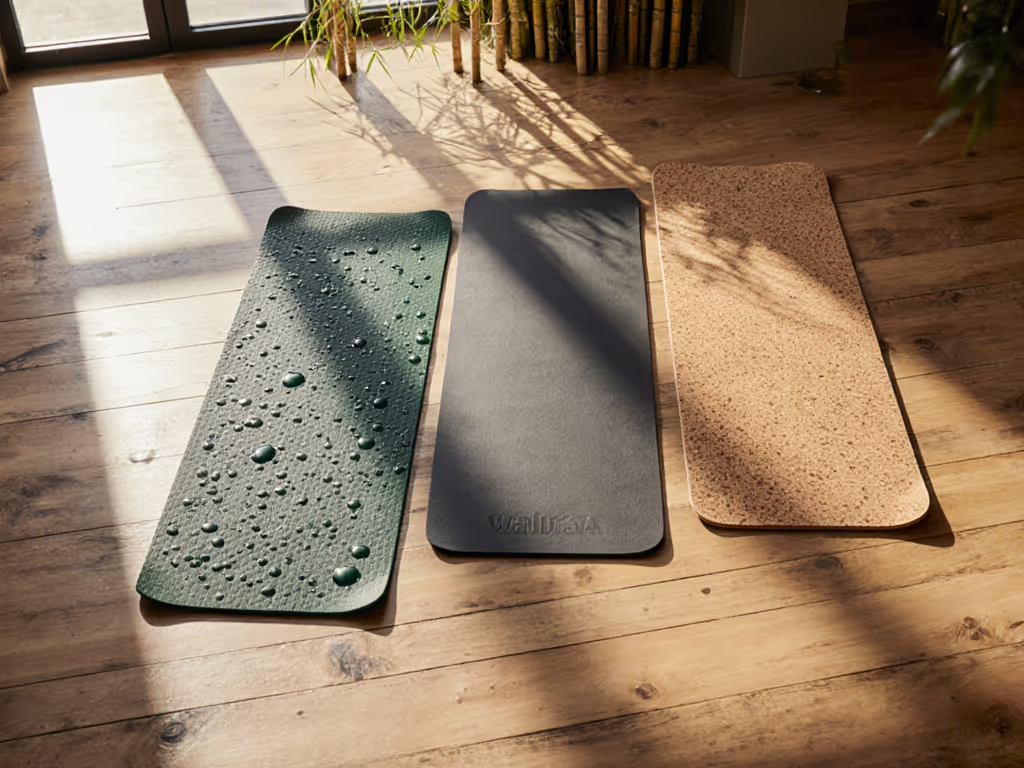
Grip under sweat is where thin and standard mats reveal their true character. A thin mat's reduced surface area and lower weight mean less mass to work with when managing moisture. On its own, this sounds like a disadvantage. But thin mats, especially those with textured or closed-cell surfaces, often perform impressively in sweaty conditions because there's simply less material for sweat to pool on.
Standard 4 to 4.5mm mats occupy a middle ground. They offer moderate surface area for grip and enough density that quality materials (natural rubber or high-grade PU composites) can maintain traction even when soaked. A popular-thickness mat made from premium materials can outperform a thin mat made from budget TPE simply because the material chemistry is superior.
Material is the throughline here. Natural rubber, according to field-tested specifics from European manufacturers and studio feedback, offers the best grip especially during sweaty sessions, outperforming synthetic alternatives under heat and moisture. A thin mat of mediocre material will slip. A standard-thickness mat of natural rubber will hold. This is why comparison by thickness alone is incomplete.
I've tested grip performance in a range of conditions: mat-to-tile flooring during hot yoga; mat-to-hardwood during power flows; mat-to-carpet in residential studios. If floor type is a variable in your space, our floor compatibility guide shows how different mats behave on wood, tile, carpet, and concrete. The pattern holds. In humid, heated rooms where sweat is inevitable, a mat's surface texture and material composition determine survival far more than the millimetres underneath.
Should You Prioritize Cushioning or Ground Connection?
This is the core tension, and the answer depends on your practice intensity. If you hold poses (Yin, restorative, prenatal work), cushioning wins. Your knees, wrists, and spine accumulate microtrauma over time, and superior cushioning is genuine joint protection.
If you flow rapidly (power yoga, Ashtanga, vigorous vinyasa), ground connection and grip take priority. Your body is moving through space. Stability in transitions, the ability to plant and trust your base, and the confidence that your hands and feet won't slip under effort: these prevent injury more reliably than cushion alone. A thin or medium mat with excellent grip and material quality is the safer choice for high-velocity movement, even if it feels less plush in warrior II.
For mixed practices (yoga days vary; sometimes you flow, sometimes you hold), a medium-thickness mat is genuinely the best compromise. You're not optimizing for one condition; you're accepting competence across several. The trade-off is that you're not elite-level good at any single demand, but you're solid everywhere.
What About Portability and Real-World Carry?
Thin mats are undeniably easier to transport. They roll tight, weigh 2 to 3 pounds, and fit in a tote bag or backpack. If you commute to studio classes, teach at multiple locations, or travel regularly, this matters operationally. Fatigue from lugging gear is real.
Standard mats weigh 4 to 5 pounds and roll to roughly fist-size diameter (manageable for most people, but noticeable if you're carrying it daily on public transit or during a 20-minute walk). Over time, that weight becomes a friction point. Some practitioners eventually buy a thin travel mat specifically for studio sessions and reserve a heavier mat for home practice, a solution if budget allows. See our picks for lightweight travel mats that grip.
The practical nuance: if portability shapes your practice frequency (e.g., you'll attend studio classes only if the mat doesn't feel like a burden), then a thin mat is an investment in consistency. If you practice at home primarily and visit studios occasionally, the weight of a standard mat is inconsequential.
How Does Durability Differ Between Thin and Standard Mats?
Thinner mats typically wear faster than thicker ones, assuming equal material quality. Less material means less buffer against compression, peeling, and surface breakdown. A 2mm mat of natural rubber will eventually show wear (pilled surfaces, slight compression in high-contact zones) faster than a 5mm mat of the same material subjected to identical use.
But durability is also a function of material grade, manufacturing precision, and care. A premium thin mat, treated well and cleaned regularly with appropriate (non-damaging) products, can last 3 to 4 years. A budget standard-thickness mat may degrade in 18 months. The correlation between thickness and lifespan is real but not destiny. Proper care matters—use a natural rubber mat cleaner and storage best practices to extend lifespan without degrading grip.
For studios rotating multiple mats or instructors carrying mats daily, medium thickness (4 to 5mm) has become practical default: enough material to withstand repeated soaking and cleaning, light enough to manage across multiple sessions, and priced reasonably enough that replacing a mat every 2 to 3 years is operationally acceptable.
What's the Sensory Reality of Transitions on Different Mats?
Beyond metrics, there are sensory notes worth documenting. On thin mats during rapid flows, you hear a subtle crispness (almost a squeak) as your hands transition across the surface. This sound is often feedback that grip is good; dry hands on a thin mat announce themselves audibly.
On standard mats, the sound profile is muted. Transitions produce a duller thud, especially on tile. In apartment living, this is a relief; your downward dogs won't rattle the ceiling below. But the muffled feedback can also mask subtle slips that a thin mat would announce.
Smell is another marker. Natural rubber mats have a distinct, earthy odor, off-putting to some, reassuring to others (a sign of authentic material rather than synthetic binders). PU-based standard mats are often odor-neutral or have a mild plastic scent that typically off-gases within weeks. Thin mats, depending on construction, can off-gas more intensely because surface area relative to volume is higher.
Texture under wet hands varies too. Some thin mats, especially those with micro-textured surfaces, maintain a tactile grip even soaked. Standard mats with smooth finishes can feel slick when wet (a real hazard in hot yoga). This is why material and surface treatment matter more than thickness alone.
How Do You Choose Based on Your Specific Practice?
For vinyasa, power, and Ashtanga yoga, a thin (2 to 3mm) or medium (4 to 4.5mm) mat is standard. The dynamic nature of these practices rewards ground connection and stability. Thin mats if you prioritize portability and proprioceptive feedback; medium if you want a buffer of cushioning without losing ground feel.
For hot yoga, the same logic applies, but material becomes critical. You need a mat that grips when soaked. Start with these verified non-slip hot yoga mats tested to hold in real sweat. A thin mat of premium natural rubber or closed-cell PU performs better than a thick mat of budget material. The sweat load in hot yoga is constant; your mat's grip profile under heat is the truth serum. Test soaked, trust dry (or better yet, trust the mat that proved itself under conditions matching your practice).
For restorative, yin, or prenatal work, thickness matters more. A 6mm mat offers cushioning that genuinely eases strain in supported poses. Portability is less critical since these practices are usually studio- or home-based, not in-transit.
For mixed or occasional practice, a medium-thickness mat (4 to 4.5mm) is the lowest-risk choice. You're insuring yourself against a variety of demands without overspending on specialized gear.
What Should You Test Before Committing?
If possible, borrow or rent a mat matching your thickness candidate and practice in conditions matching your typical environment (ideally heated or already humid). Pay attention to: (1) how your hands feel during weight-bearing transitions, (2) whether your feet slip during standing balances, (3) how the mat feels post-class when soaked, and (4) how long drying takes and whether odor emerges.
A mat that holds grip throughout a 60-minute hot flow is a candidate. A mat that feels stable in your typical transitions is essential. A mat that dries reasonably fast and doesn't develop a sour smell is worth your investment.
If buying online, prioritize sellers with liberal return policies. A 30-day trial at home in your actual studio setup is worth far more than a manufacturer's claims. Your practice conditions (room temperature, flooring type, sweat profile, frequency) are unique to you.
How Do You Commit Confidently?
Start with material transparency. Confirm the mat is natural rubber, quality PU, or documented synthetic (and know the emissions profile). Review grip performance in heat and moisture, not just in dry showroom conditions. Ask studios and instructors which mats they rotate through without slipping complaints.
Second, match thickness to your primary practice style. If you flow, prioritize ground connection over cushion. If you hold long poses, invest in thickness. If you do both, a medium mat is your practical answer.
Third, assess durability realistically. A thin mat is a 2 to 3-year tool; a standard mat is 3 to 5 years, depending on use and care. Price accordingly.
Finally, trust field-tested specifics over marketing language. A mat that holds under sweat, heat, and rapid transitions is a mat that frees your mind during practice. That's the only promise worth making.
Tested soaked, trusted dry. Your mat becomes your faithful companion, not a liability in your flow, but a platform you can invest in fully, every time you step on.
Related Articles