Yoga Mats for EDS: Stability Without Overextension
By Aiko Tanaka • 15th Feb
Exercise yoga mats for Ehlers-Danlos Syndrome require fundamentally different selection criteria than standard yoga mats. While any large yoga mat can provide a surface to practice on, the right one becomes a foundation for safe, sustainable movement when you live with hypermobility. For people with hEDS or HSD, the mat isn't just comfort (it is a stability tool that either enables confident alignment or compounds the risk of subluxation and joint strain).
I've rotated through dozens of mats across back-to-back hot yoga classes, testing their behavior under sweat, temperature swings, and the precise demands of bodies that move differently. What I've learned applies directly to EDS practice: field heat is the truth serum for mat grip. The same principle holds when your nervous system is already managing joint instability. A mat that slips undermines the proprioceptive feedback your body desperately needs. A mat that doesn't feel trustworthy steals focus from the breath and alignment work that actually heals.
Here's what you need to know to choose wisely.
Why Mat Selection Matters for EDS More Than Most People Realize
The Connection Between Grip, Proprioception, and Joint Safety
Yoga for hEDS and HSD works because it strengthens muscles around joints and builds proprioceptive awareness (your body's ability to sense where it is in space[1][2]). But that protective benefit only materializes if your foundation is stable. A mat that shifts under your hands during downward dog, or slides your feet during warrior poses, forces your stabilizer muscles to work overtime to compensate. Over time, this compounds joint stress rather than relieving it.
People with hypermobility already experience decreased clarity of sensation at end-of-joint ranges, which can trigger nervous system alarm and anxiety[4]. A joint protection yoga surface that provides consistent, predictable grip gives your proprioceptive system clearer feedback. This reduces neural noise and allows you to sense the micro-adjustments that keep you safe.
The Stability-Versus-Cushion Trade-off
Standard mat marketing emphasizes cushioning. For EDS, this is a trap. Too much give underfoot actually destabilizes your standing poses and makes it harder to engage the core stabilization that protects hypermobile joints[1][6]. Too little cushion creates pressure and wrist/knee strain during floor work. For the science behind how thickness changes alignment and joint loading, see our mat thickness biomechanics explainer.
The solution isn't more cushion, it is a proprioception-focused yoga mat design that balances responsive support with enough give to absorb impact. You want to feel the floor beneath you, not float above it.
Core FAQ: Choosing the Right Mat for EDS Practice
What thickness is safest for hypermobility?
Most practitioners with EDS benefit from 4-6 mm thickness. This range offers enough shock absorption to protect wrists and knees during floor poses without creating so much instability that your ankles and hips must overcorrect during balance work[1][6].
If you're moving through vinyasa flows or bearing weight in planks, the mat should feel planted, not bouncy. Conversely, if you're doing mostly restorative or yin yoga, a 7-8 mm mat with firmer density can support your joints during longer holds without compression issues.
What surface texture provides the best grip without slipping under sweat?
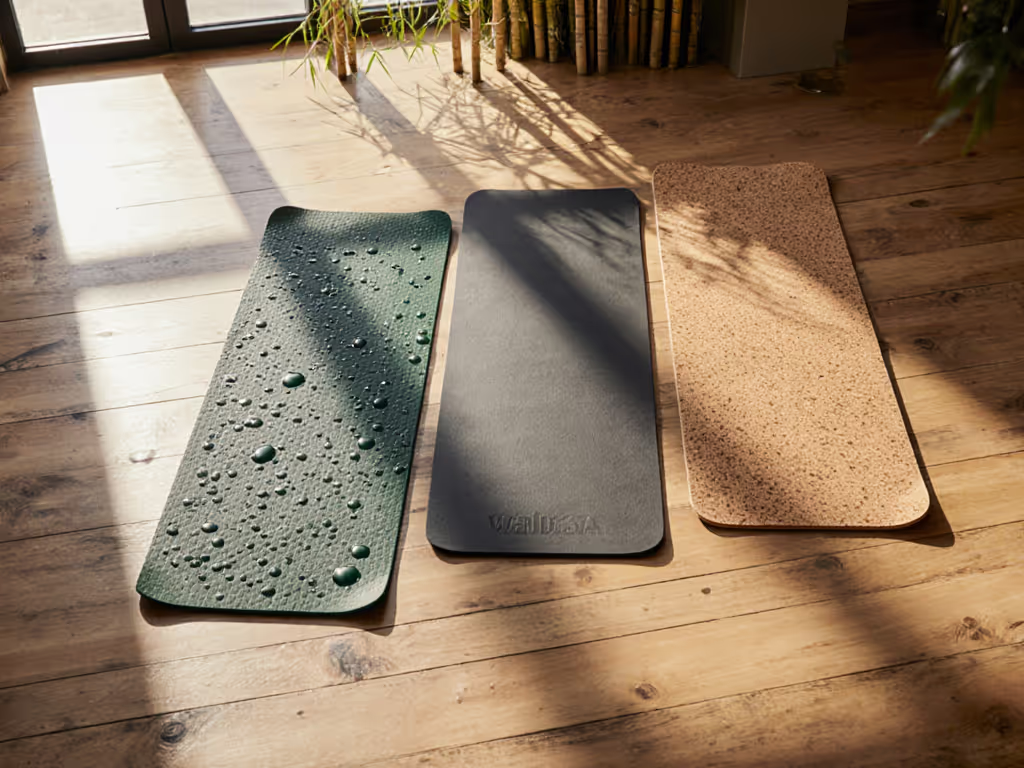
Studio chaos, simple choices. After countless sweat-soaked sequences, I've found that closed-cell materials with micro-textured tops grip most reliably across both dry and damp conditions. Natural rubber with a fine, consistent pattern outperforms smooth PU finishes, which can feel slippery the moment your hands perspire.
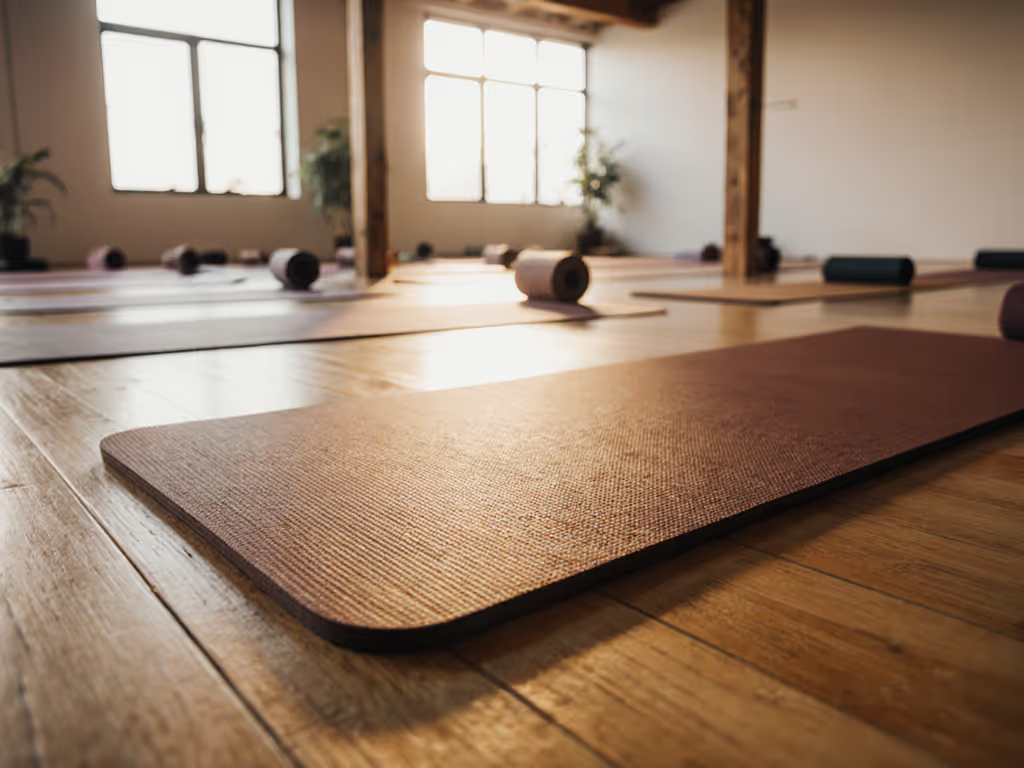
For EDS-specific practice, this matters because you need grip that's consistent and predictable, not a surface that changes behavior as humidity rises. On a packed August evening when the AC failed and the room fogged, my lighter travel mat slid during a simple twist. The backup (heavier, rubber-top) held steady through puddles. After class, I timed dry-down and disinfecting. That taught me what durability and performance really mean under stress. A trustworthy mat frees your mind to focus on alignment, not grip anxiety. For a deeper look at how surface patterns influence traction under sweat, read our surface grip texture science guide.
Should I choose a large mat or standard size?
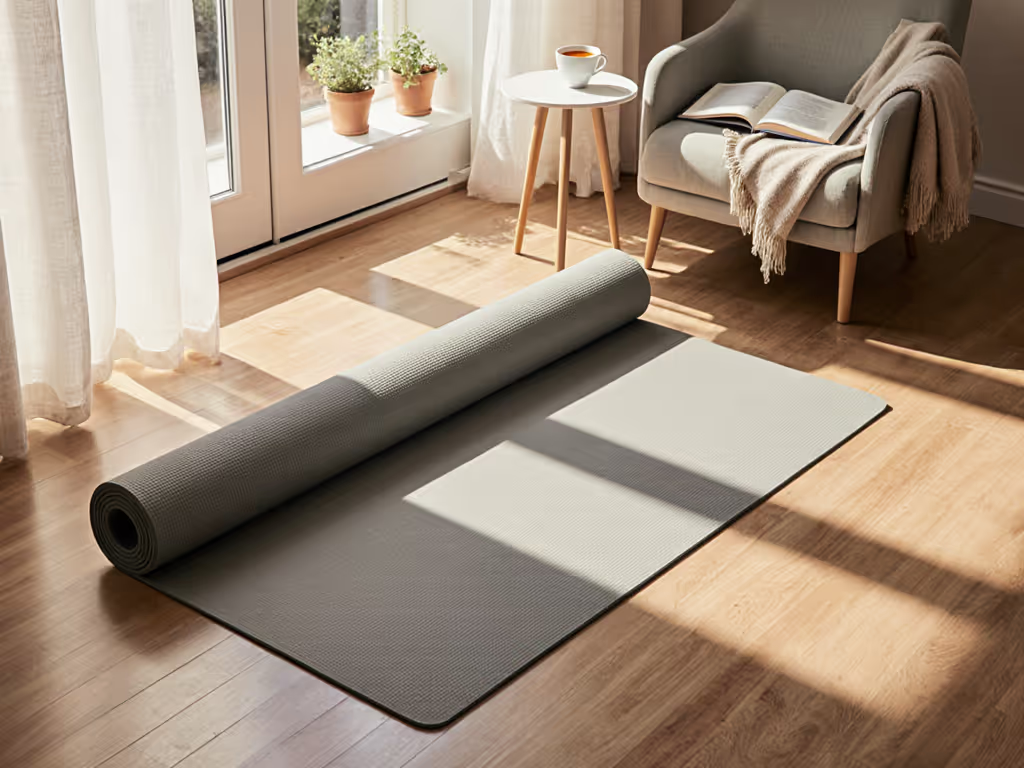
If your body is tall (over 5'10"), broad-shouldered, or you practice with props like bolsters and blocks, a large yoga mat measuring 72"+ in length and 30"+ in width gives you room to scale poses and position stabilizing props without feeling cramped. Cramped positioning forces compensations, exactly what hypermobile joints cannot afford.
Size also affects portability. If you practice in a studio, standard is fine. If you're teaching or rotating mats between locations, consider weight and packability alongside dimensions.
What materials are safest and most durable for frequent, sweat-heavy practice?
Natural rubber with a closed-cell base remains the gold standard for EDS practitioners who can tolerate latex. It offers superior grip, excellent durability under high-frequency use, and moderate off-gassing when new (typically resolves within days to weeks with ventilation).
TPE (thermoplastic elastomer) mats are a solid alternative if you have latex sensitivity. High-quality TPE resists compression, maintains grip, and degrades more slowly than budget PU options. Look for closed-cell construction, not open-cell, which absorbs sweat and odor.
Avoid cheap PU mats that delaminate or peel. Once the top layer compromises, the underlying foam compresses unevenly, destroying stability[1]. For joint protection, a durable mat is not a luxury, it's essential.
How important is material transparency and off-gassing?
Critical. Many people with hypermobility and chronic pain are also sensory-sensitive to chemical smells and VOC off-gassing. Request material safety data sheets from manufacturers. Look for certifications like Cradle to Cradle, GREENGUARD, or OEKO-TEX, which indicate lower emissions profiles. If you're sensitive to smells or additives, our non-toxic mat guide for chemical sensitivity outlines safer materials and testing steps.
New rubber mats will smell. Salt-scrub or air the mat outdoors for 48 hours before use. If the smell persists strongly after one week, consider a different option. Chronic chemical exposure isn't worth it.
What Research and Expert Guidance Say
Yoga IS Safe for EDS When Practiced Correctly
Yoga is not contraindicated for hEDS or HSD[2]. In fact, it is encouraged as a low-impact exercise modality, grouped with walking, swimming, and elliptical work[2]. The key is avoiding overextension and prolonged passive stretching at end-range while focusing on mid-range stability work[2][4].
Benefits include increased muscle strength around unstable joints, improved proprioceptive feedback, reduced anxiety, and better pain management through breathwork and relaxation[1][2]. A well-designed mat supports all of this by giving you a reliable, trustworthy platform.
The Role of Props and Modification
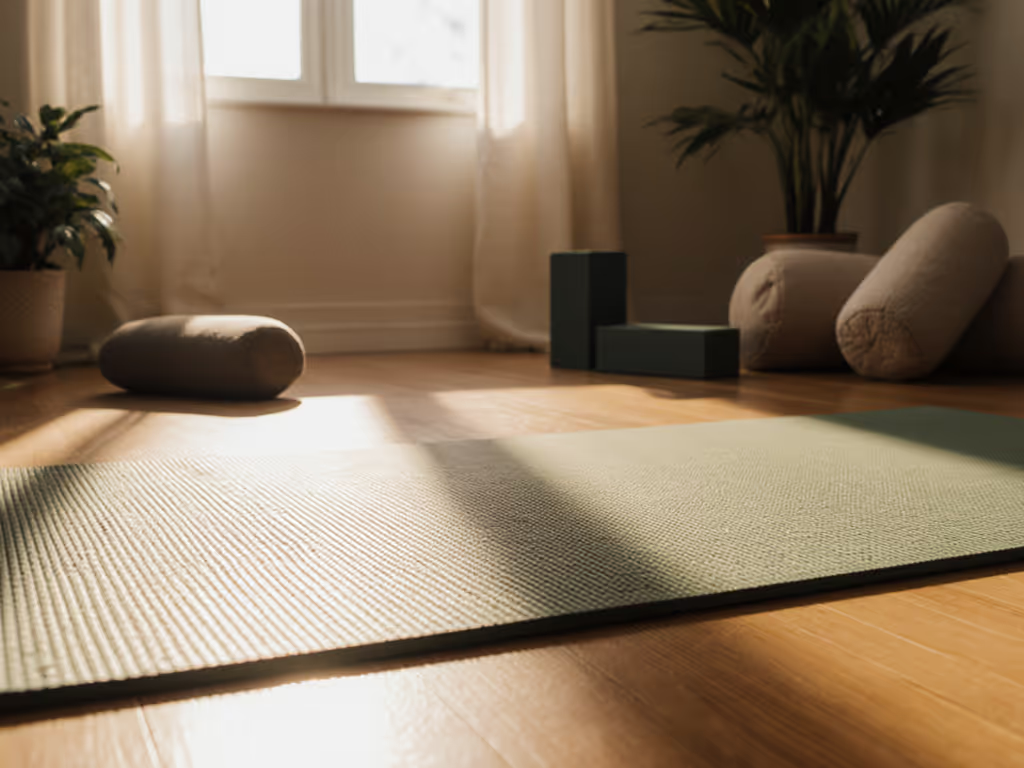
Yoga props (blocks, bolsters, straps, blankets) are not optional for EDS practice; they're foundational[1]. For options that keep blocks and bolsters from sliding, see our alignment-marker mats tested with props. They allow you to find safe ranges, build strength without hyperextension, and reduce joint stress. Your mat should work with props, not against them. If a block or bolster shifts on your mat surface, that's a stability fail for your knees or hips.
The Importance of Informed Instruction
Work with an instructor who understands EDS, hypermobility, or at least physical therapy principles for connective tissue disorders[1][2]. They can cue you toward mid-range engagement, help you recognize when you're at risk of overextending, and suggest pose modifications.
Actionable Next Steps
Step 1: Assess Your Current Mat
Does it slip when your palms sweat? Does it feel too bouncy in warrior poses or too hard under your wrists? Bring those observations to your next class. Ask your instructor or a physical therapist familiar with EDS whether your mat is supporting or hindering your alignment.
Step 2: Clarify Your Practice Environment
Do you practice in a hot studio, a cool home, on carpet, or tile? Is noise a concern for neighbors? Do you carry the mat daily or leave it rolled at home? These constraints shape your ideal thickness, material, and size.
Step 3: Prioritize Grip and Mid-Range Stability Over Cushion Comfort
For EDS practice, a mat that feels "firm" under your feet is actually a feature, not a bug. It sends clearer proprioceptive signals to your nervous system. Test a mat for grip by pressing your palms and feet down; it should feel planted, not glassy or sticky.
Step 4: Ask About Material Composition and Off-Gassing
Before purchasing, request the material breakdown and any certifications. Air the mat thoroughly before your first class. If chemical smell lingers beyond one week, return it.
Step 5: Invest in Durability
A mat that lasts 3-5 years without peeling, compression, or grip loss is worth the upfront cost. For EDS, consistency matters. You want the same grip, cushion, and feel every time you practice, not a mat that changes as it ages.
Your mat is where body awareness and safety begin. Choose one that honors both.
Related Articles