Yoga Mat History: How Modern Styles Shaped Design
By Sofia Álvarez • 2nd May
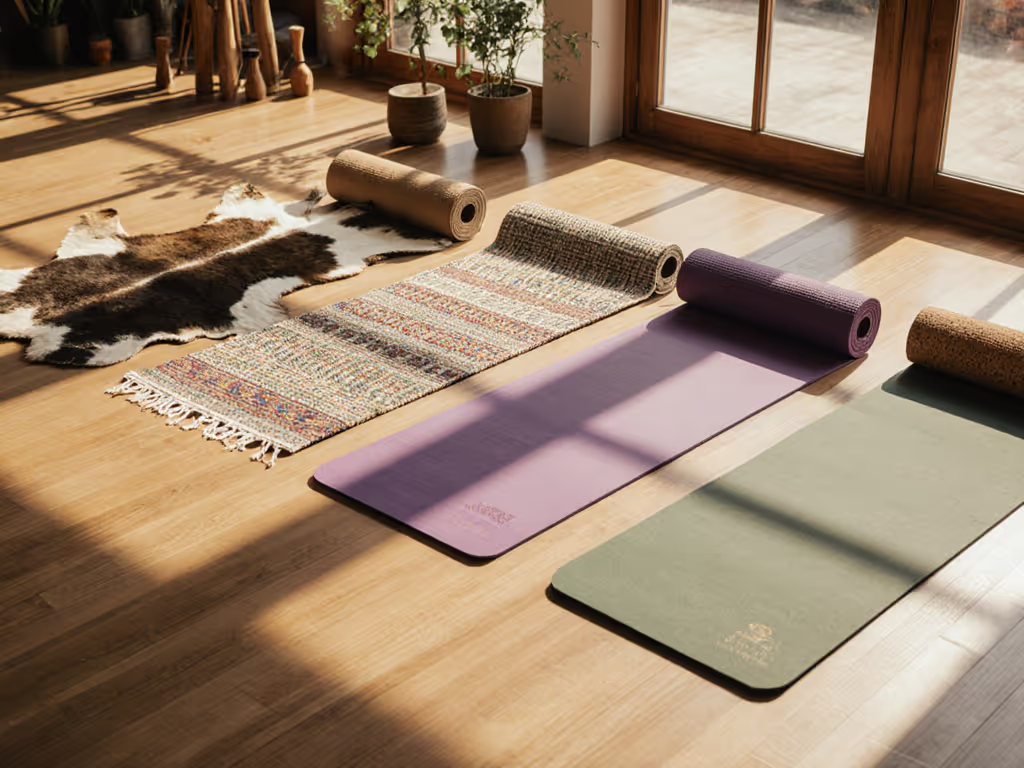
Yoga mats didn't exist until less than 50 years ago (a surprising reality for a practice over 5,000 years old).[3] Today's confusion around grip, cushioning, odor, and sustainability isn't random; it traces directly to the speed at which mats evolved and the material compromises made at each stage. Understanding that history helps you decode what modern mats are, why they feel the way they do, and which performance trade-offs actually matter for your practice and body.
Why Didn't Ancient Yogis Need Mats?
For thousands of years, yoga practitioners didn't need mats as we know them today.[2] Early yogis practiced primarily seated breathing and meditation (asanas, or physical postures, were minimal and grounded).[3] When they did practice, they used natural surfaces like grass, leaves, or animal hides (deer or tiger skins), which provided a soft, non-slip base while keeping them close to the earth.[3] By around 500 BCE, practitioners in India had developed simple jute and cotton darbhasana mats for seated work.[3] The emphasis was on stillness, grounding, and minimal cushioning (not the dynamic flows we associate with modern yoga).
This matters because it shaped material expectations for centuries: mats were support tools for stability and cleanliness, not performance platforms for movement. For a deeper timeline of innovations, see our evolution of yoga mats.
What Shifted When Yoga Came West?
The real turning point came in the 20th century as yoga gained popularity in the West. Early Western practitioners tried to adapt what they had: towels and cotton sheets on wooden floors.[8] But this created an immediate pain point that would drive the entire industry (hands and feet slipped, making standing balances frightening and requiring constant muscular effort just to stay upright).[6]
In the 1960s, a British yoga teacher named Angela Farmer was teaching in Germany when she encountered this same problem. Rather than accept it, she adapted a piece of foam carpet underlay (the kind used under carpets to prevent them from skidding) and cut it to towel size.[3][6] That material had grip. She brought the idea back to London, where it caught on among other practitioners.[4]
Her father, Richard Farmer, recognized the potential and contacted the German padding manufacturer. By 1982, he had become the first retailer of these "sticky mats," launching what would become a revolution.[6] The mat was made from PVC (polyvinyl chloride) and had a textured surface that provided traction impossible on cloth.[5] At roughly $17 to $22 in the United States (plus shipping), it was an affordable solution to a real problem.[1]
Material names matter less than verified formulations and context: what mattered then was grip. What matters now is understanding what grip costs.
Why Did PVC Dominate the Market?
By the 1990s, PVC mats dominated yoga studios worldwide, popularized by brands like Manduka.[3] The reason was straightforward: PVC delivered excellent grip, was affordable, and felt durable enough to withstand the wear of regular classes and home practice. Hugger Mugger Yoga Products began mass-producing purpose-made yoga mats in the early 1990s, initially importing Farmer-style mats before developing their own formulations when they found the original mats began to crumble with use.[6]
For practitioners doing vinyasa flows, hot yoga, or arm balances, PVC solved a critical safety problem: you could hold a pose without sliding. For a side-by-side look at these materials, read our PVC vs natural rubber guide. That is not a trivial benefit; it enabled an entire category of practice to flourish in the West.
But PVC came with costs that took years to surface: it's non-biodegradable, releases toxic chemicals during production and disposal, and (critically for the audience concerned about sensory experience) PVC mats often carried a persistent chemical odor and off-gassing (VOCs, or volatile organic compounds).[3] Early practitioners simply accepted this as the price of grip.
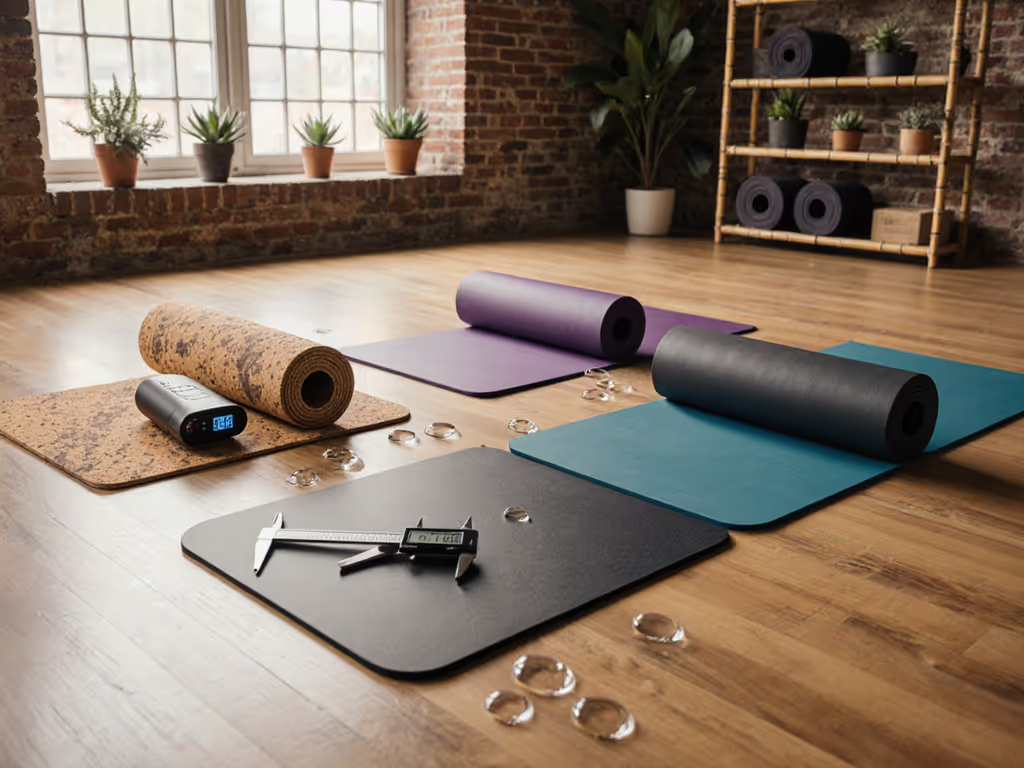
I learned firsthand at a community studio how much this trade-off mattered. A student unrolled a mat marketed as "eco" with supposedly low-VOC construction. The grip was superb. The smell, however, was unmistakable, solvents and adhesives. We aired out the room and I took samples home for testing. The readings showed no hazardous levels by published standards, but the intensity was real, and for a sensitive-nose practitioner, unusable. That day I committed to a principle: low-VOC, yes, but never at the cost of safety or real-world usability. Context is everything.
What Changed the Trajectory?
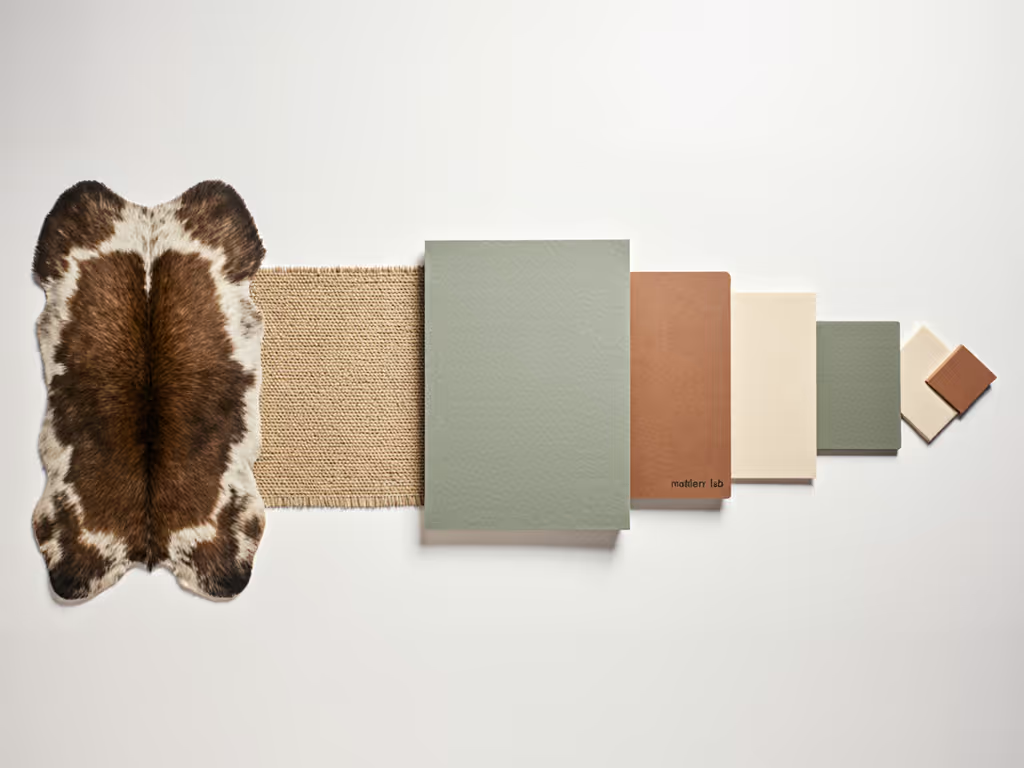
As environmental awareness grew (particularly from the 1990s onward), the yoga community began seeking alternatives. The problem: natural rubber mats smell like rubber (another odor trade-off), cork lacks grip on wet skin, TPE (thermoplastic elastomer) feels plasticky to many practitioners, and PU (polyurethane) formulations vary wildly in durability and off-gassing profiles.[3] There is no perfect material. There are only informed compromises.
This is where understanding the audience's pain points becomes essential. Someone practicing hot yoga needs a material that grips when wet (natural rubber excels here, though the smell during break-in is real). If this is you, our tests of non-slip hot yoga mats can narrow choices fast. Someone practicing yin or restorative yoga in a cool room prioritizes cushioning and low noise (PU or cork-TPE blends often shine). Someone in a small apartment caring about neighbor disturbance and personal odor sensitivity might choose a natural rubber mat with a cork top, accepting the weight penalty and higher cost as "sustainability with receipts" (where durability and resale value offset the initial investment).
The Modern Material Landscape
Today's yoga mats reflect a fragmented market shaped by historical compromises:
PVC (still in use) Excellent grip; affordable; proven durability. Drawbacks: non-biodegradable, VOC concerns, environmental footprint in production.
Natural rubber Grips exceptionally well when wet; biodegradable; source-traceable options exist. Drawbacks: rubber smell (though this fades); allergies for some users; heavier; higher cost; requires verification of sourcing ethics.
PU (polyurethane) Lightweight; low odor; good cushioning when formulated well. Drawbacks: highly variable across brands, cheap PU delaminates quickly; tearable; unclear durability compared to rubber.
TPE (thermoplastic elastomer) Lightweight; non-toxic when formulated well; easier to recycle than PVC. Drawbacks: can feel plasticky; less grip than natural rubber; widely marketed as "eco" without clear sourcing transparency.
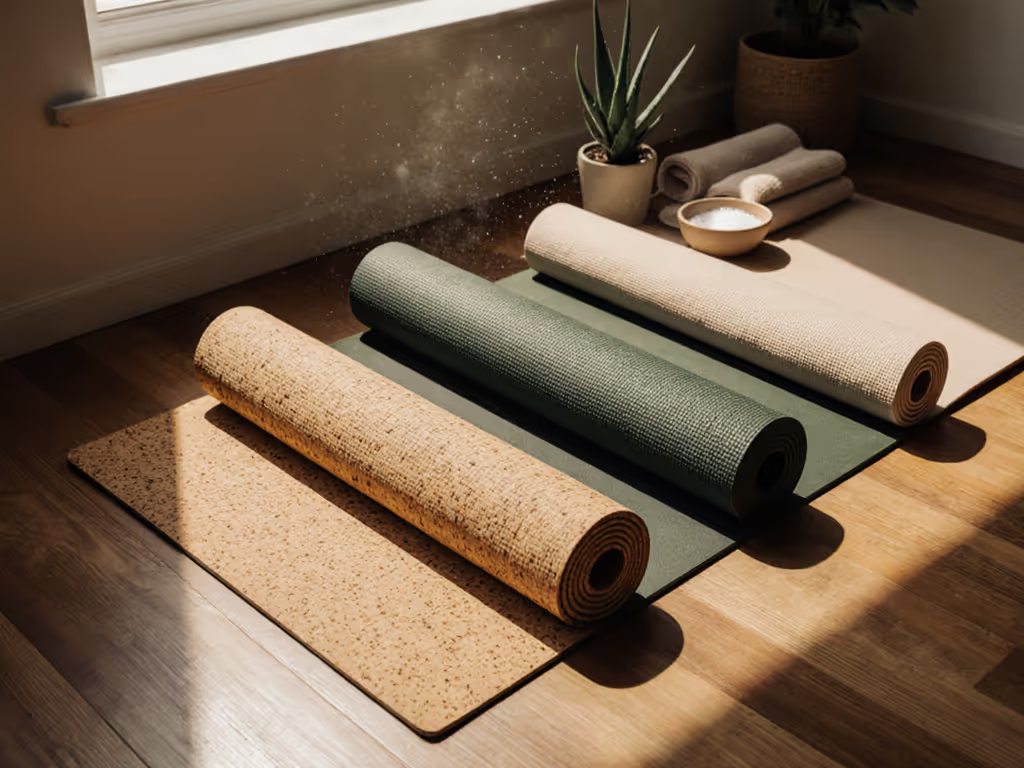
Cork or cork-TPE blends Natural; aesthetic; moderate grip and cushioning. Drawbacks: can feel harder than yogis expect; less traction on wet skin; less durable than rubber if not sealed properly.
Each material exists because of historical performance needs. Understanding which trade-off aligns with your practice, body, and sensory tolerances is the skill that modern mat shopping demands.
How Does History Inform Your Mat Choice Today?
The evolution from animal skins → cloth rugs → foam underlay → mass-produced sticky mats → material diversity tells us something crucial: every mat design is a negotiation between competing needs.
If your pain point is slipping hands in a hot vinyasa flow, the historical answer (PVC or natural rubber grip) is still the best answer. Cost and odor become secondary. If your pain point is joint discomfort and sensory sensitivity in a small home space, the material priorities flip (you might prioritize low odor, quiet landings, and lightweight portability, accepting slightly less wet grip in exchange).
The market confusion many practitioners face ("Why does this $120 mat feel different from a $50 mat? Why does one smell and another doesn't? Why does mine peel after six months?") traces back to rapid industrialization without material standards.[3] Before 1990, almost no one had options. Now, the abundance of choice mimics the material complexity that was previously hidden.
Here's what the historical record clarifies: durability is sustainability. When your mat truly reaches end-of-life, see our yoga mat recycling guide for responsible options. A mat that lasts five years at the cost of some off-gassing during the first month beats a mat that's "eco" but delaminates in 18 months. Likewise, a mat that grips reliably and safely for ten years prevents injuries that send practitioners to physical therapy (and often back to practicing on anything other than a mat, abandoning the practice altogether). Material science matters less than verified performance under real conditions (sweat, humidity, flooring type, and practice intensity).
Key Trade-offs for Your Specific Situation
High-sweat, dynamic practice (vinyasa, power yoga, hot yoga) Prioritize wet-grip over weight or odor. Natural rubber or PVC are proven. Accept that natural rubber will smell for 1-3 weeks; PVC carries VOC concerns upfront. Both grip when wet (the #1 safety factor for these practices).
Moderate-intensity, mindful practice (hatha, yin, restorative) Cushioning and low noise matter more than extreme grip. PU, TPE, or cork-TPE blends are viable. Low odor becomes a priority since you'll be nose-near the mat in forward folds and restorative poses. Durability concerns are lower because impact forces are gentler.
Taller or larger body, or limited space Mat length and width aren't trivial (they directly affect confidence and safety in poses). Longer/wider mats are harder to find and heavier, raising portability trade-offs. Higher-quality mats (natural rubber, premium TPE) often come in extended sizes, but at a price premium. This is where transparent spec sheets and user reviews from similar-bodied practitioners become invaluable.
Apartment living with noise concerns Natural rubber and high-quality PU mats typically muffle landings better than PVC or thin TPE. This choice often conflicts with low cost; expect to pay more for acoustic performance.
Environmental or odor sensitivity Look for independently third-party tested mats with VOC certifications (e.g., Greenguard Gold). Verify sourcing transparency for natural rubber (Fair Trade or equivalent). Recognize that "eco" labeling is common but unverified; durability (a mat you keep for a decade) is a more concrete environmental metric than material claims alone. To avoid greenwashing, use our eco-friendly mat verification guide.
The Bottom Line: Sustainability Works When Gear Stays in Use
Yoga mats went from non-existent to ubiquitous in fewer than 50 years, collapsing millennia of practice philosophy into industrial timelines.[3] That speed created the trade-off landscape we navigate today. Understanding the history (why grip became critical, why PVC dominated, why diversity emerged) clarifies that your mat choice is never simply about "eco" vs. "conventional." It is about matching material performance to your body, practice, and living situation in a way that keeps you practicing, injury-free, and satisfied enough to use that mat for years.
The practitioners most confident in their mat choice aren't those who bought the most expensive or the "greenest" option. They're those who matched verified performance (grip, cushioning, durability, cleanliness) to their actual needs, acknowledged the trade-offs honestly, and committed to using the mat long enough for that choice to pay off.
Explore Further
If you're mat-shopping, consider these evidence-based next steps: First, identify your primary pain point (grip in wet conditions? joint comfort? odor sensitivity? durability?). Second, research mats within your priority category, checking for third-party testing on durability and emissions if those are concerns. Third, read user reviews from practitioners with your body type and practice style, they're more predictive than generic "5-star" ratings. Fourth, calculate longevity: a mat costing $30 more but lasting three extra years is often the smarter investment. Finally, test if possible, or confirm return policies before buying, especially if you're sensitive to odor or have latex allergies, which require hands-on assessment.
The history of yoga mats teaches us that innovation doesn't stop. Material science evolves, market feedback reshapes offerings, and your informed choice today shapes what manufacturers develop tomorrow. Choose with intent, use with purpose, and let durability be your measure of sustainability.
Related Articles